


OUR catalog
Classes for
Normal People
Can’t choose just one class? Sign up for The Society of Normal People to get unlimited access to all of B4NP classes, exclusive episodes, and community forum.
Looking to watch a class you purchased in the past on our old website? We have transitioned to a new class portal where you can access your past purchases. Email us with your original order number(s) and we’ll get you set up.
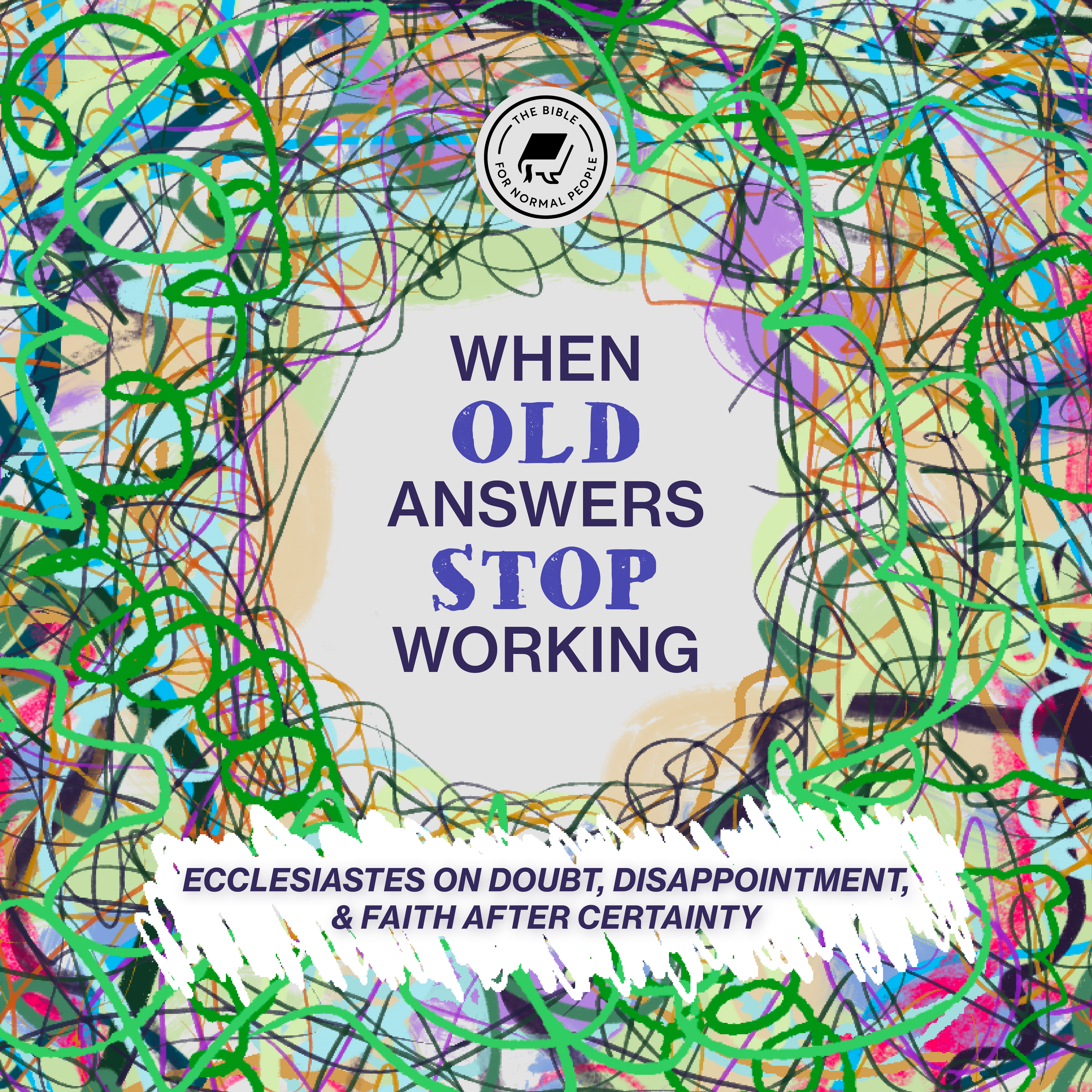
When Old Answers Stop Working: Ecclesiastes on Doubt, Disappointment, and Faith After Certainty
Did you know there’s a book in the Bible whose main voice is in full-blown faith-crisis mode for twelve chapters? Now you do. His name—or at least his pen name—is Qoheleth, and the book is Ecclesiastes. He looks at life, death, work, wisdom, and even God and asks: What’s the point? Why care? So if you’ve ever been mad at God, wondered what any of this is for, or found that the old answers just don’t work anymore, Ecclesiastes might be your new best friend.
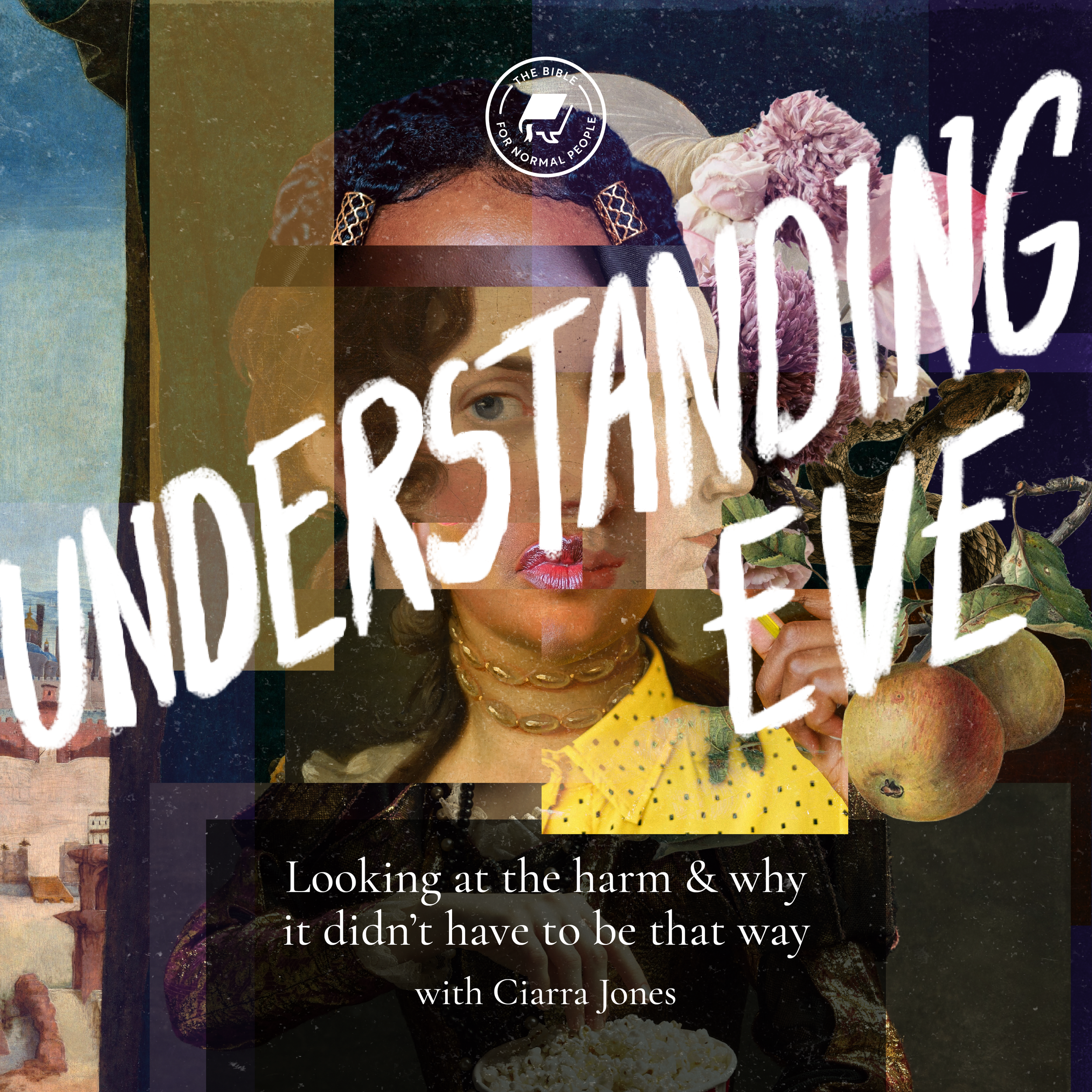
Understanding Eve: Looking At The Harm & Why It Didn’t Have To Be That Way
For centuries, the story of Eve has been used to say something about women: that they are more easily deceived, less trustworthy, or even responsible for humanity’s downfall. But is that really what the story says? In this class, we’ll explore how interpretations of Eve have shaped the way women have been understood and treated —and how reading the story from different perspectives can reveal an Eve we've never been taught to see. Along the way, we’ll discover that the harm caused by this story wasn’t inevitable but came from choices people have made about how to interpret it.
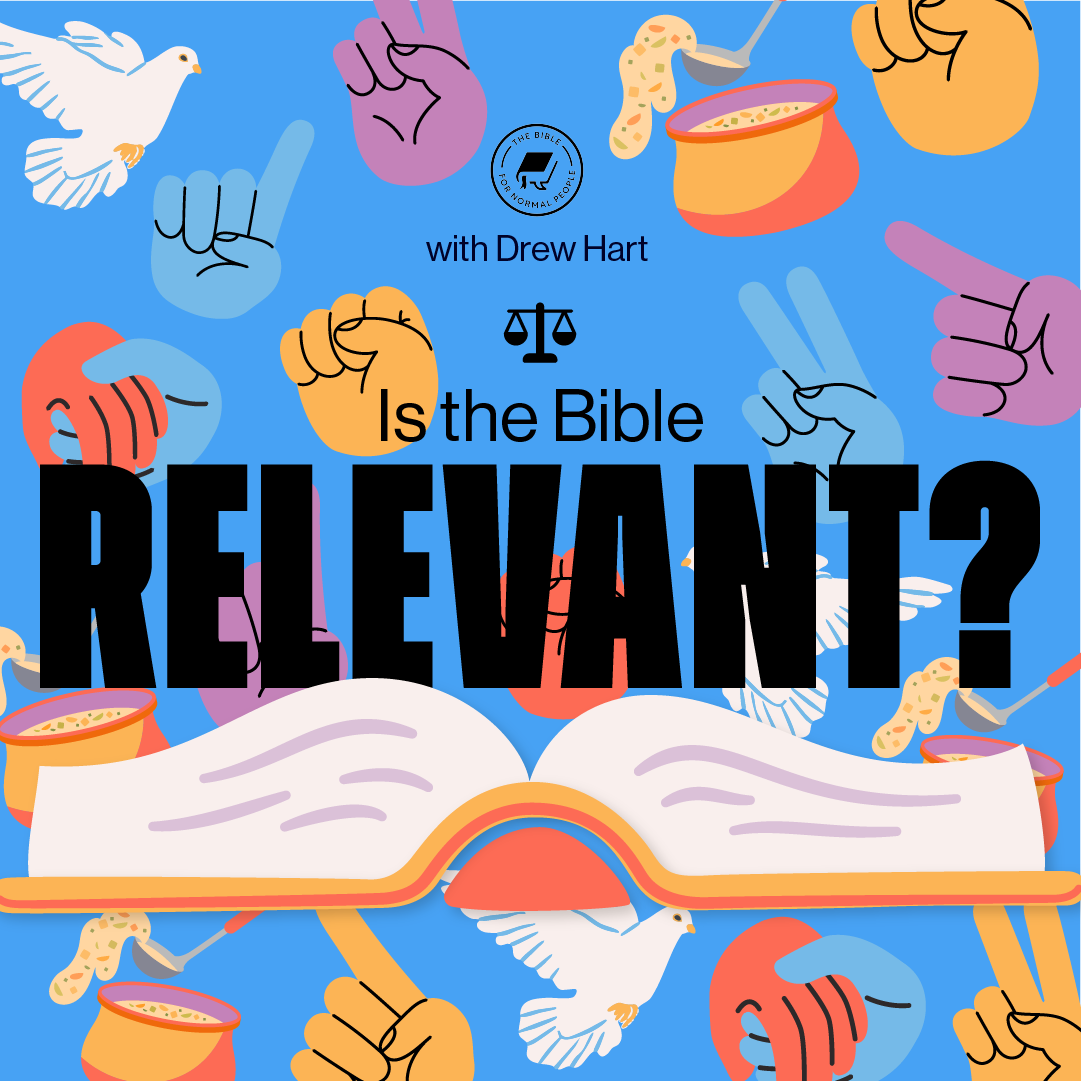
Is The Bible Relevant?
Many of us grew up being told the Bible had an answer for every moral dilemma, every political debate, every life decision. When we discovered it didn't work that way, we were left wondering: Is the Bible even relevant anymore?
In this class, theologian Drew G. I. Hart argues that if we're looking for a rulebook, the answer is clearly no. But if we're willing to read scripture as a living conversation of wisdom and inspiration that bends toward justice, liberation, and shalom, then the Bible becomes extremely relevant. Drawing on his own theological traditions, Drew will walk through how different parts of the Bible are healing as well as harmful, yet collectively can inform some of today's most urgent concerns (race, empire, gender, land, and peacemaking) and how we can interpret, wrestle with, and embody scripture’s wisdom for pursuing more just and mutually liberative communities rather than as a weapon to dominate others.
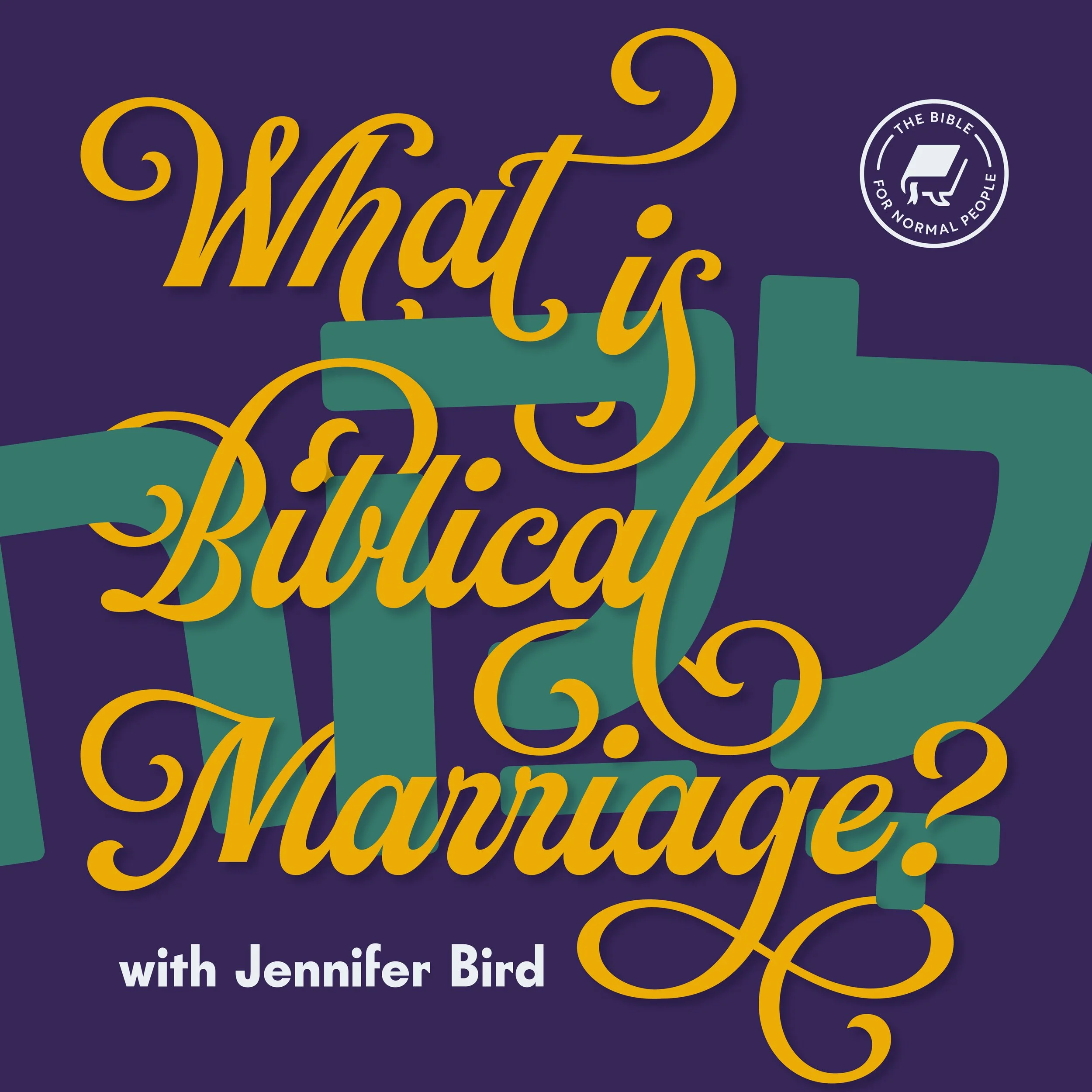
What Is Biblical Marriage?
A common refrain in many Christian spaces today is the call to pursue a “biblical marriage.” But what if that phrase tells us more about modern culture wars than it does about the ancient world? In this class, Dr. Jennifer Bird draws on her extensive research to reframe four passages most often used to define “biblical marriage.” This class invites a more historically grounded, theologically responsible conversation about marriage and human flourishing—helping us reframe how we approach the Bible for guidance today.
The Bible is Not a Rulebook
For many Christians, the Bible has long been treated as a moral instruction manual—offering clear, timeless, universal rules for right and wrong. But what happens when the text doesn’t behave like a rule book? When it contradicts itself, feels outdated, or refuses to give us the clarity we crave?
Shaped by Suffering: How Trauma Impacts the Bible and Its Readers
Shaped by Suffering: How Trauma Impacts the Bible and Its Readers with Alexiana Fry explores how trauma-informed interpretation reshapes our understanding of Scripture, from the wounds of war and exile to the grief we carry as modern readers. This class offers tools for reading the Bible with greater empathy, honesty, and awareness.
Anti-Apologetics 101: Better Ways to Read the Bible
The Bible has too often been used as a weapon to subjugate women, justify racism, harm LGBTQ+ people, and cover up abuse. In Anti-Apologetics 101: Better Ways to Read the Bible, Zach W. Lambert offers a more Christlike, justice-centered approach to Scripture that leads to healing and liberation instead of harm.
American Christianity: How Did We Get Here?
Why is Christianity in the United States so deeply entangled with white Christian nationalism, political extremism, and racism today? Led by Dr. Jemar Tisby, this class will confront hard truths about how race and power shaped Christianity in the United States and how we can come together to imagine a better path forward.

Mythbusting the Bible with Dan McClellan and Pete Enns
In this class, historical critical Bible scholars Dan McClellan and Pete Enns invite you into a different kind of conversation about the Bible—one that’s honest, curious, and unafraid to wrestle with tough questions. They’ll share key realizations—their aha! moments—that shifted their entire perspective, not just on how to read the Bible, but on what the Bible even is.
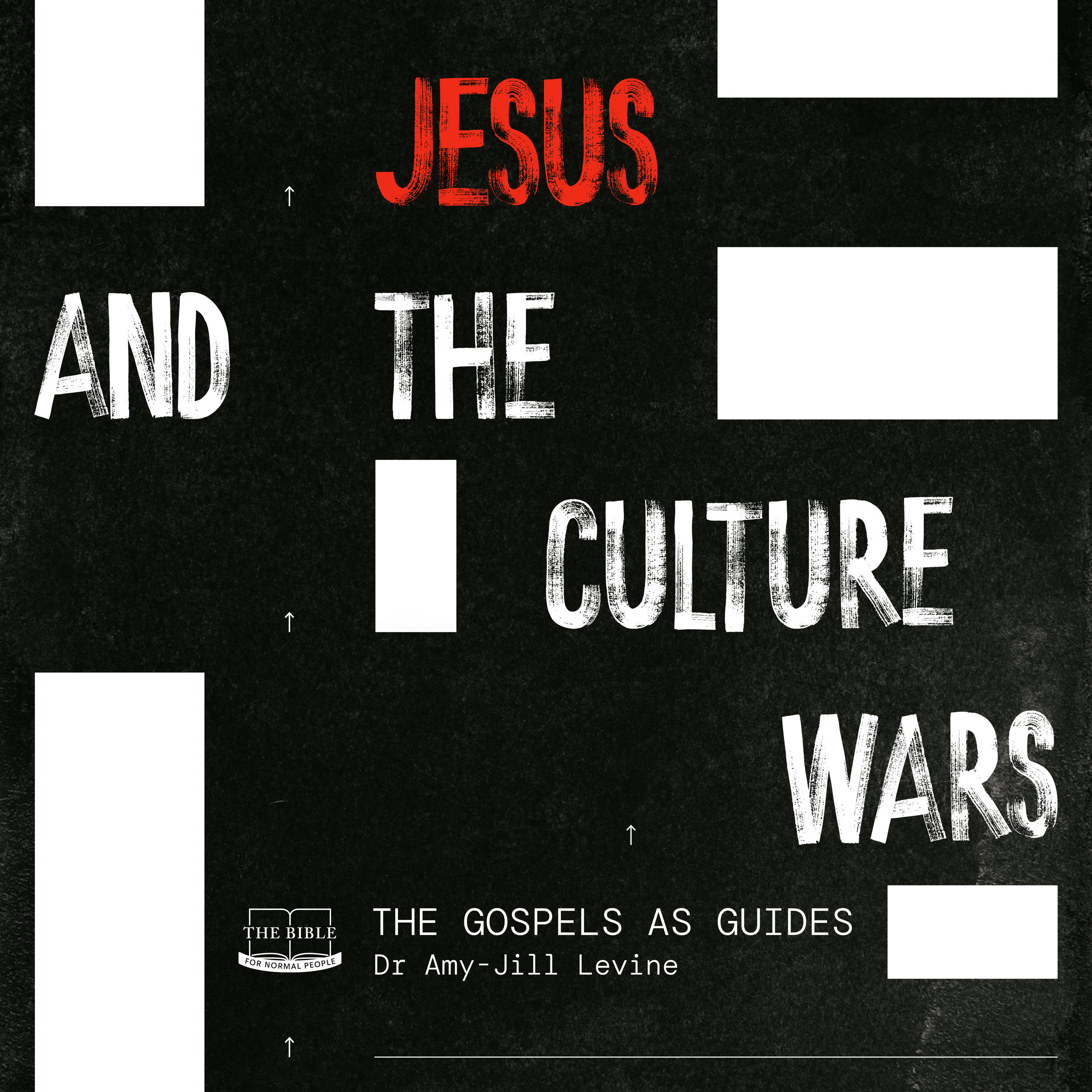
Jesus and the Culture Wars: The Gospels as Guides
How do stories told by and about Jesus help us ask the right questions about the issues fracturing society today? Are the Gospels even valuable to people who don’t believe in G-d, miracles, or final judgement? AJ Levine explains how Jesus’ parables, healings, instructions, and debates help readers navigate both community responsibility and personal ethics on topics such as health care, economics, ethnicity, slavery’s legacy, and family values.
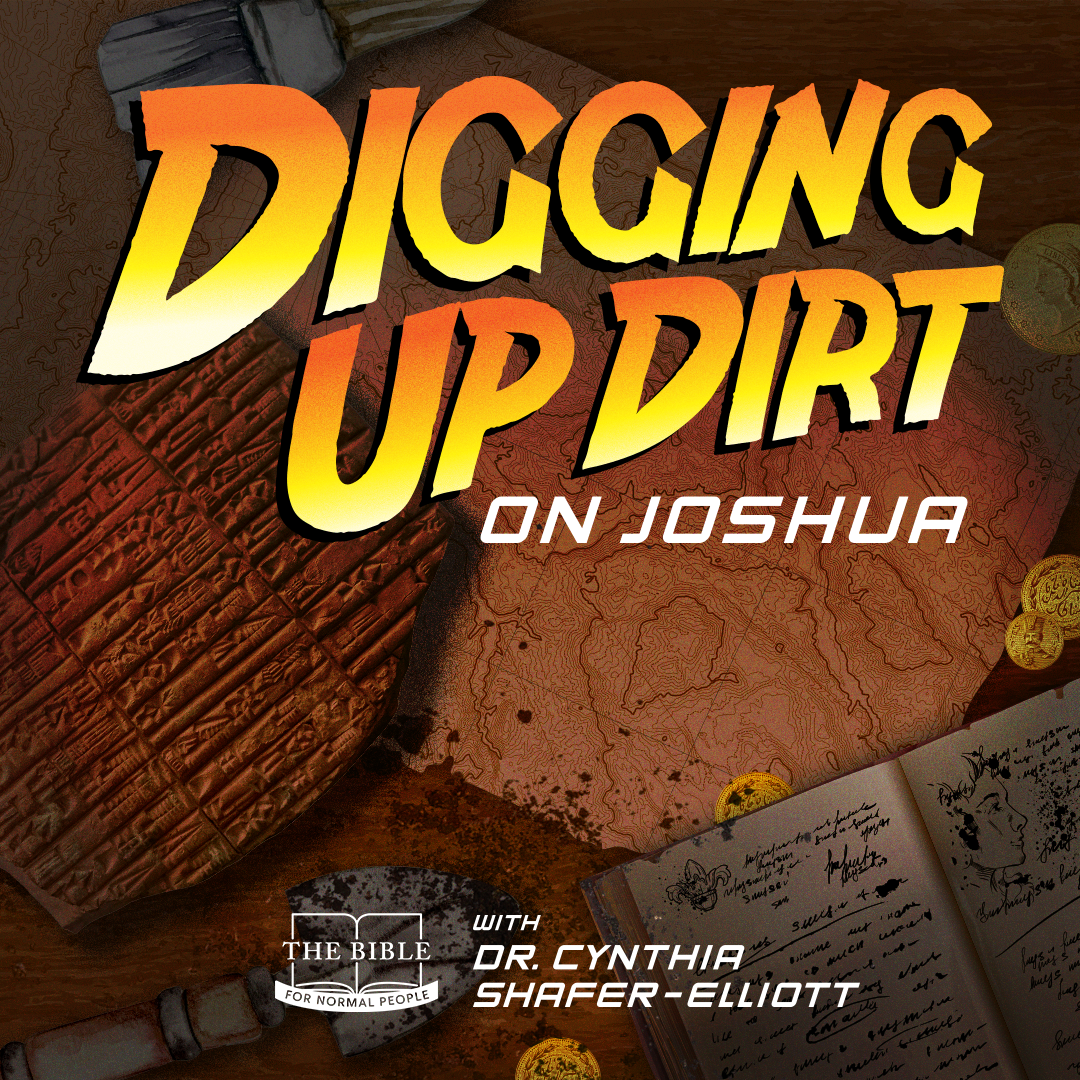
Digging Up Dirt on Joshua: Historical Conquest or Fan Fiction?
Digging Up Dirt on Joshua: Historical Conquest or Fan Fiction?. Is the book of Joshua an accurate historical rundown, a tall theological tale, or something in between? Join archaeologist and Hebrew Bible scholar Dr. Cynthia Shafer-Elliott as she digs into how Joshua fits into the big-picture Bible narrative and tackle big ethical and theological questions about divine warfare, land possession, and how these texts have been used—and misused—in modern times.
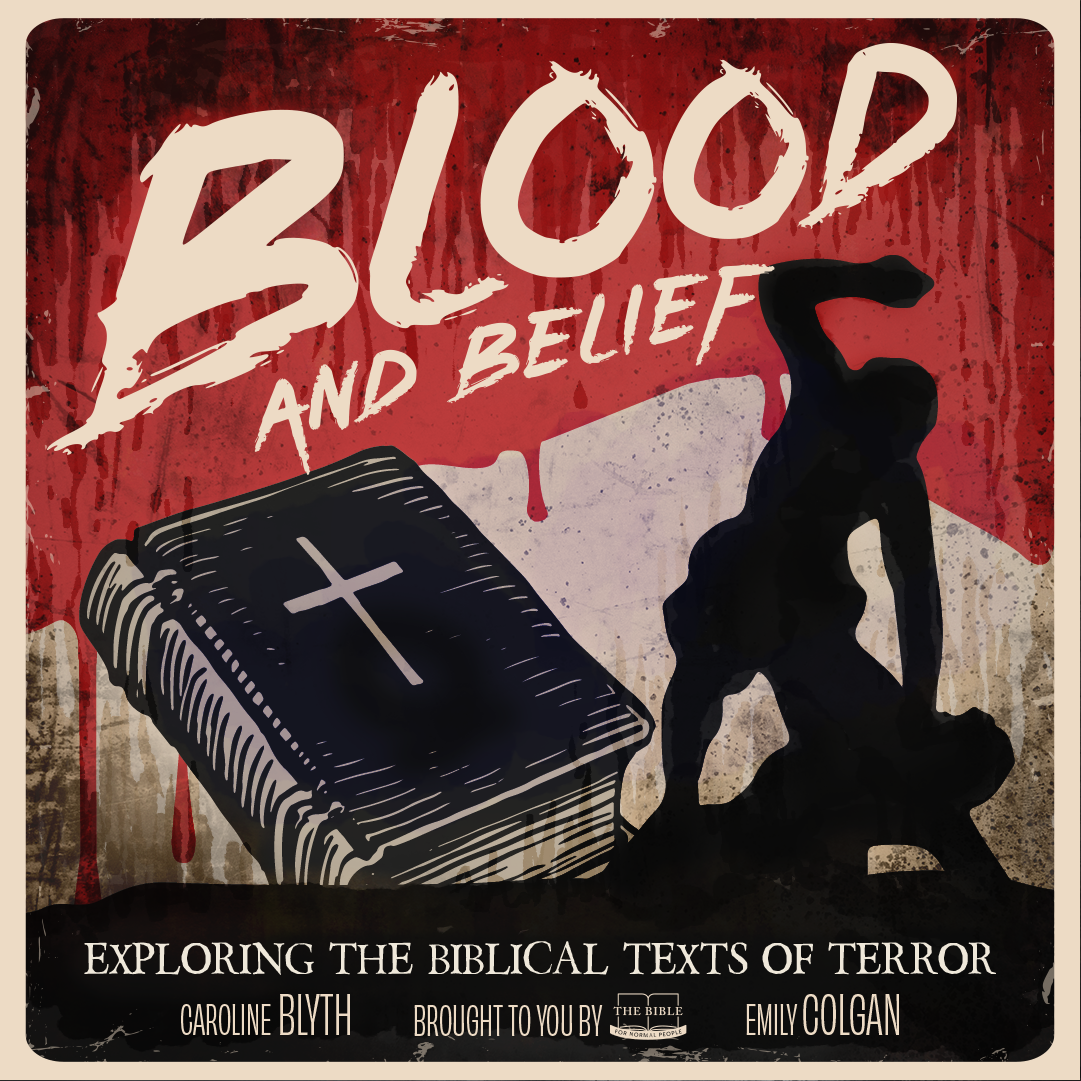
Blood and Belief: Exploring the Biblical Texts of Terror
Blood and Belief: Exploring the Biblical Texts of Terror. The Bible features both explicit and subtle depictions of violence, join scholars Caroline Blyth and Emily Colgan as they examine how these “texts of terror” reveal enduring lessons that help us understand and confront contemporary violence in its various forms.
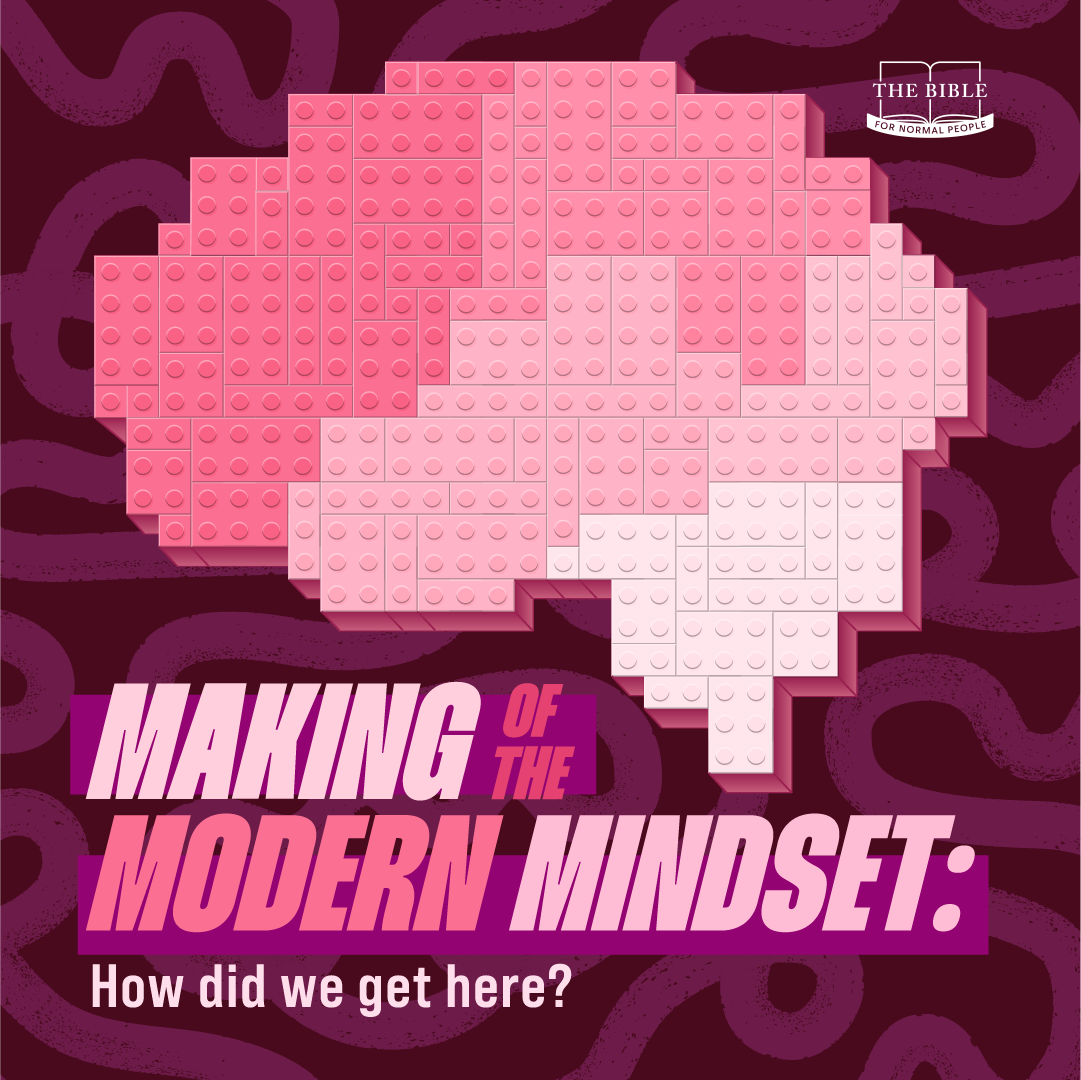
Making of the Modern Mindset: How Did We Get Here?
Where do our views on authority, tradition, ethics, and identity even come from—and how do these views influence the way we interpret the Bible? Together we’ll explore how these cultural shifts continue to impact our understanding of ancient texts and examine how the forces of our time shape the faith we practice today.
Get a Grip on the New Testament
Get a Grip on the New Testament: Three classes taught by Jennifer Garcia Bashaw exploring the context of the New Testament, the Gospels, and the Epistles.
Banned Books: The Apocrypha Edition
In this one-night class, Dr. Brandon W. Hawk will define what “apocrypha” are and why they matter for understanding the Bible as well as the histories of Judaism and Christianity.

Go To Hell?: Alternatives to Eternal Damnation
Go To Hell?: Alternatives to Eternal Damnation. Dr. Jaime Clark-Soles teaches on the history, language, and “meaning” of hell, what the Bible says about hell, the implications of hell on God’s character and morality, and how the concept of hell intertwines with the desire for justice.

Restoring All Things: Biblical Roots of Christian Universalism
Restoring All Things: Biblical Roots of Christian Universalism. Bradley Jersak teaches on the theology of “ultimate redemption” keeping in mind the biblical text and ancient context while remaining accessible to everyday people.
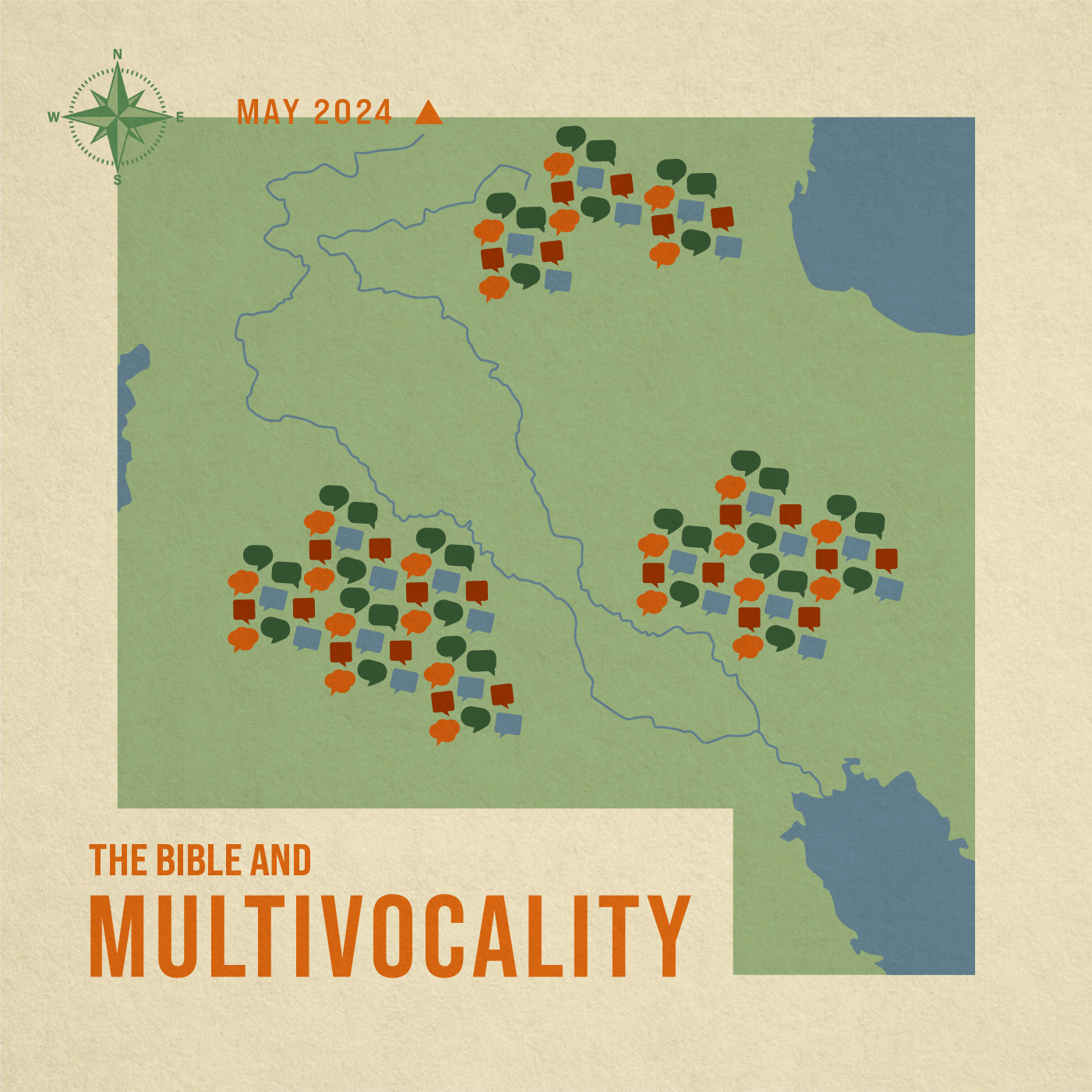
The Bible and Multivocality
For some readers, the idea that the Bible is composed of varied, distinct, and even contradictory voices is not only controversial but incompatible with taking the Bible seriously. However, in this class Dr. Pete Enns argues that multivocality is a central component of the Biblical text. The multiplicity of voices, even those that are in direct opposition to one another, is by design. This multivocality is at the heart of the Bible. Join Dr. Enns as he examines why the Bible has multiple voices as well as how these voices shape how we understand and view the text.
Divine Violence in the Old Testament
For some readers, the idea that the Bible is composed of varied, distinct, and even contradictory voices is not only controversial but incompatible with taking the Bible seriously. However, in this class Dr. Pete Enns argues that multivocality is a central component of the Biblical text. The multiplicity of voices, even those that are in direct opposition to one another, is by design. This multivocality is at the heart of the Bible. Join Dr. Enns as he examines why the Bible has multiple voices as well as how these voices shape how we understand and view the text.

Origin of the Old Testament
For those who have embraced the idea that the Bible in its original form is perfect and unchanging, the answer to the questions of how and why the Old Testament/Hebrew Bible arose is simple: it came directly from God to humanity. Any errors and discrepancies are the result of careless transcribers. However, as Dr. Peter Enns explores in this class, the historical evidence demonstrates the answers to these questions are, in fact, much more complicated. Join Dr. Peter Enns as he examines the convoluted, lengthy, and messy origin of the Old Testament.