


OUR catalog
Classes for
Normal People
Can’t choose just one class? Sign up for The Society of Normal People to get unlimited access to all of B4NP classes, exclusive episodes, and community forum.
Looking to watch a class you purchased in the past on our old website? We have transitioned to a new class portal where you can access your past purchases. Email us with your original order number(s) and we’ll get you set up.
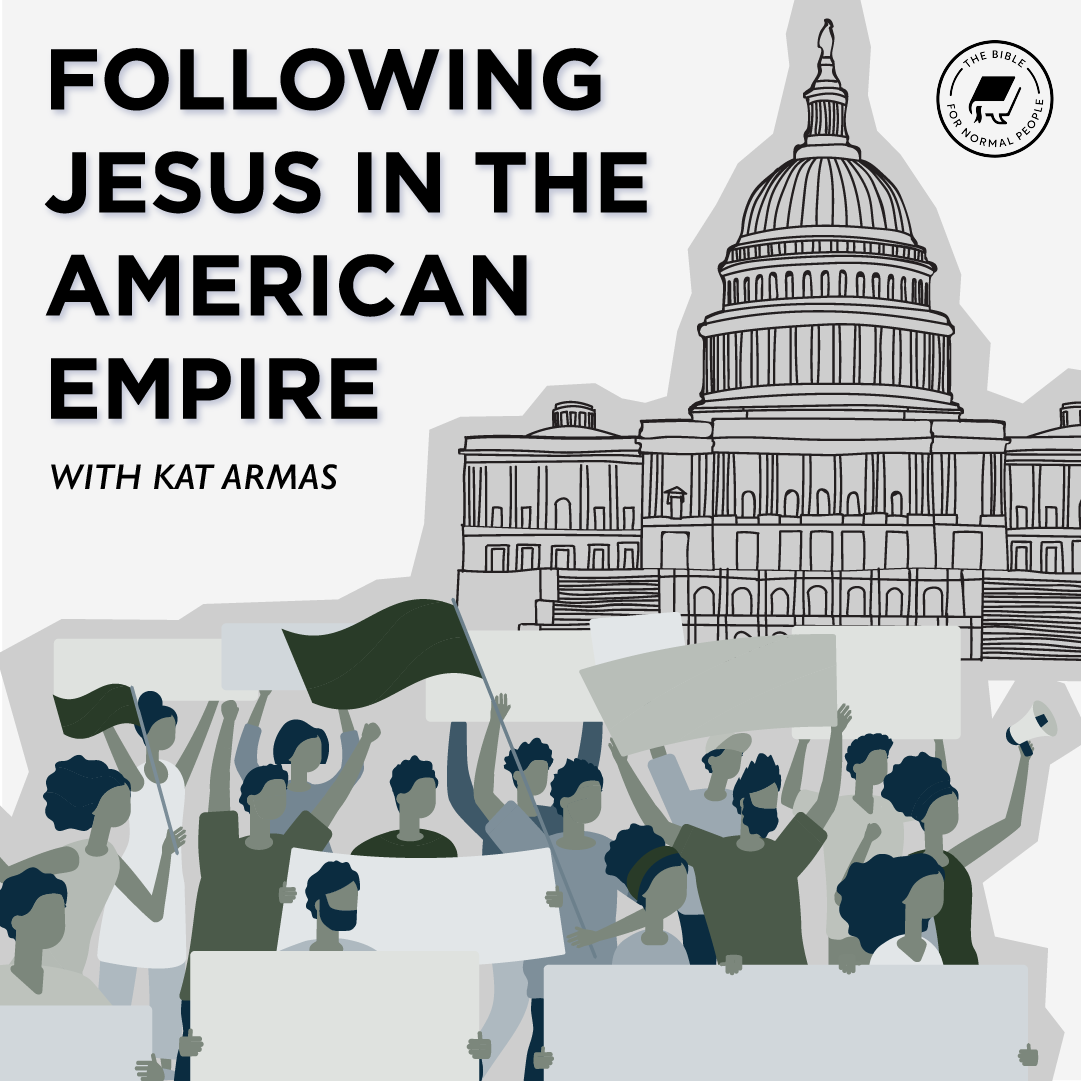
Following Jesus in the American Empire
What is the right relationship of faith to politics? If you’re watching the news lately you might have seen it play out in a lot of ways, many of them harmful. This class invites us to reflect on what it means for the U.S. to be an “empire” and how the values of empire continue to shape our lives. Rather than separating faith and politics we will look at how Scripture has things to say about politics: about power, injustice, and the mercy and justice of God. In this class, instructor Kat Armas will teach us about the stories we have inherited—about power, belonging, fear, and control—and consider how they echo the logic of empire present throughout Scripture.
Together, we will explore what it means to follow Jesus when our politics are full of division and domination. How can our theology move us toward faithful presence rather than passive acceptance? What does it look like to embody mercy, justice, and truth in our personal lives, our families and neighborhoods, and out in public?

Back to the Beginning: How to Ask Better Questions of Genesis
Questions about why God does what God does have baffled readers of the Bible since forever, especially when it comes to the book of Genesis. But what if we’ve been asking the wrong questions? What if Genesis isn’t giving us unchanging information about what God is actually doing or thinking, but instead doing something completely different?
In this class, Pete Enns will guide us through why Genesis was actually written—and how understanding the “why” will help us to ask better questions of the text.
The Bible is Not a Rulebook
For many Christians, the Bible has long been treated as a moral instruction manual—offering clear, timeless, universal rules for right and wrong. But what happens when the text doesn’t behave like a rule book? When it contradicts itself, feels outdated, or refuses to give us the clarity we crave?
Shaped by Suffering: How Trauma Impacts the Bible and Its Readers
Shaped by Suffering: How Trauma Impacts the Bible and Its Readers with Alexiana Fry explores how trauma-informed interpretation reshapes our understanding of Scripture, from the wounds of war and exile to the grief we carry as modern readers. This class offers tools for reading the Bible with greater empathy, honesty, and awareness.
Jesus and the Culture Wars: The Gospels as Guides
How do stories told by and about Jesus help us ask the right questions about the issues fracturing society today? Are the Gospels even valuable to people who don’t believe in G-d, miracles, or final judgement? AJ Levine explains how Jesus’ parables, healings, instructions, and debates help readers navigate both community responsibility and personal ethics on topics such as health care, economics, ethnicity, slavery’s legacy, and family values.
Blood and Belief: Exploring the Biblical Texts of Terror
Blood and Belief: Exploring the Biblical Texts of Terror. The Bible features both explicit and subtle depictions of violence, join scholars Caroline Blyth and Emily Colgan as they examine how these “texts of terror” reveal enduring lessons that help us understand and confront contemporary violence in its various forms.

Restoring All Things: Biblical Roots of Christian Universalism
Restoring All Things: Biblical Roots of Christian Universalism. Bradley Jersak teaches on the theology of “ultimate redemption” keeping in mind the biblical text and ancient context while remaining accessible to everyday people.
The Bible and Multivocality
For some readers, the idea that the Bible is composed of varied, distinct, and even contradictory voices is not only controversial but incompatible with taking the Bible seriously. However, in this class Dr. Pete Enns argues that multivocality is a central component of the Biblical text. The multiplicity of voices, even those that are in direct opposition to one another, is by design. This multivocality is at the heart of the Bible. Join Dr. Enns as he examines why the Bible has multiple voices as well as how these voices shape how we understand and view the text.
Divine Violence in the Old Testament
For some readers, the idea that the Bible is composed of varied, distinct, and even contradictory voices is not only controversial but incompatible with taking the Bible seriously. However, in this class Dr. Pete Enns argues that multivocality is a central component of the Biblical text. The multiplicity of voices, even those that are in direct opposition to one another, is by design. This multivocality is at the heart of the Bible. Join Dr. Enns as he examines why the Bible has multiple voices as well as how these voices shape how we understand and view the text.

Origin of the Old Testament
For those who have embraced the idea that the Bible in its original form is perfect and unchanging, the answer to the questions of how and why the Old Testament/Hebrew Bible arose is simple: it came directly from God to humanity. Any errors and discrepancies are the result of careless transcribers. However, as Dr. Peter Enns explores in this class, the historical evidence demonstrates the answers to these questions are, in fact, much more complicated. Join Dr. Peter Enns as he examines the convoluted, lengthy, and messy origin of the Old Testament.

Is God All-Knowing?
What Does God Know? Omniscience is one of God’s most iconic attributes and an attribute many Jewish people, Christians, and Muslims believe in. Yet when we look at several of the stories in the opening chapters of Genesis, God does not appear to be omniscient! God appears to make simple mistakes, needs to change plans, is unable to foresee easily predictable situations, and regrets choices after making them. What are people in general, and people of faith in particular, supposed to do with biblical stories like these? The answer to that question will affect not only our beliefs about God’s knowledge, but about every single thing we believe about God.
The S Word: What Sin Is & How It Has Infiltrated Our Systems
What do naked mole rats, the Millenium Bridge, & systemic injustice have in common? Why, in his letter to the Romans, does Paul emphasize sin as more of a person at work rather than individual shortcomings? What is Paul attempting to communicate about sin? In this class, Dr. Matthew Croasmun will explore Paul’s uses of “Sin” language in Romans 5-8 and how we might see the effects of sin at play in our world today.

Not Kirk Cameron’s Apocalypse
Earthquakes. Falling stars. A blood red moon. The final judgment. The last days. These are just some of the things people associate with Revelation, the book that closes the Christian Bible. Because Revelation claims to disclose “things that must happen soon,” many Christians read it as a catalog of predictions or a blueprint for the “last days.” As result, some Christians use the book’s images and proclamations to control, dominate, instill fear, and even make a profit. In this class, Dr. Lynn R. Huber will define what an “apocalypse” is and why the author of Revelation might have chosen this language found in the last book of the Christian Bible.

Why God Died
Jesus’ crucifixion is a central part of Christianity, but why Jesus died is anything but simple to explain. In this one-night class, Dr. Jennifer Garcia Bashaw will survey the major atonement theories and comment on their strengths and weaknesses in explaining salvation.
Reframing God: An Introduction to Open and Relational Theology
In this four-week course, Thomas Jay Oord introduces us to open and relational theology.
Preaching Salvation Beyond Penal Substitutionary Atonement
This course is for any minister who wants to expand their language concerning the death of Jesus. Through a mixture of lectures and Q&A, we will talk about salvation in meaningful ways, through the lenses of sacrifice, victory, love, and freedom.

Beyond the Prince of Egypt
A class with Pete Enns on how to read the book of Exodus like an adult.
Everyday Life in Ancient Israel
Join archaeologist and Biblical scholar Cynthia Shafer-Elliott in a four week journey through everyday life in the ancient world, and why it matters for how we read our Bible.

What Is God Like?
A course on imagining and reimagining the God of the Bible taught by Pete Enns.