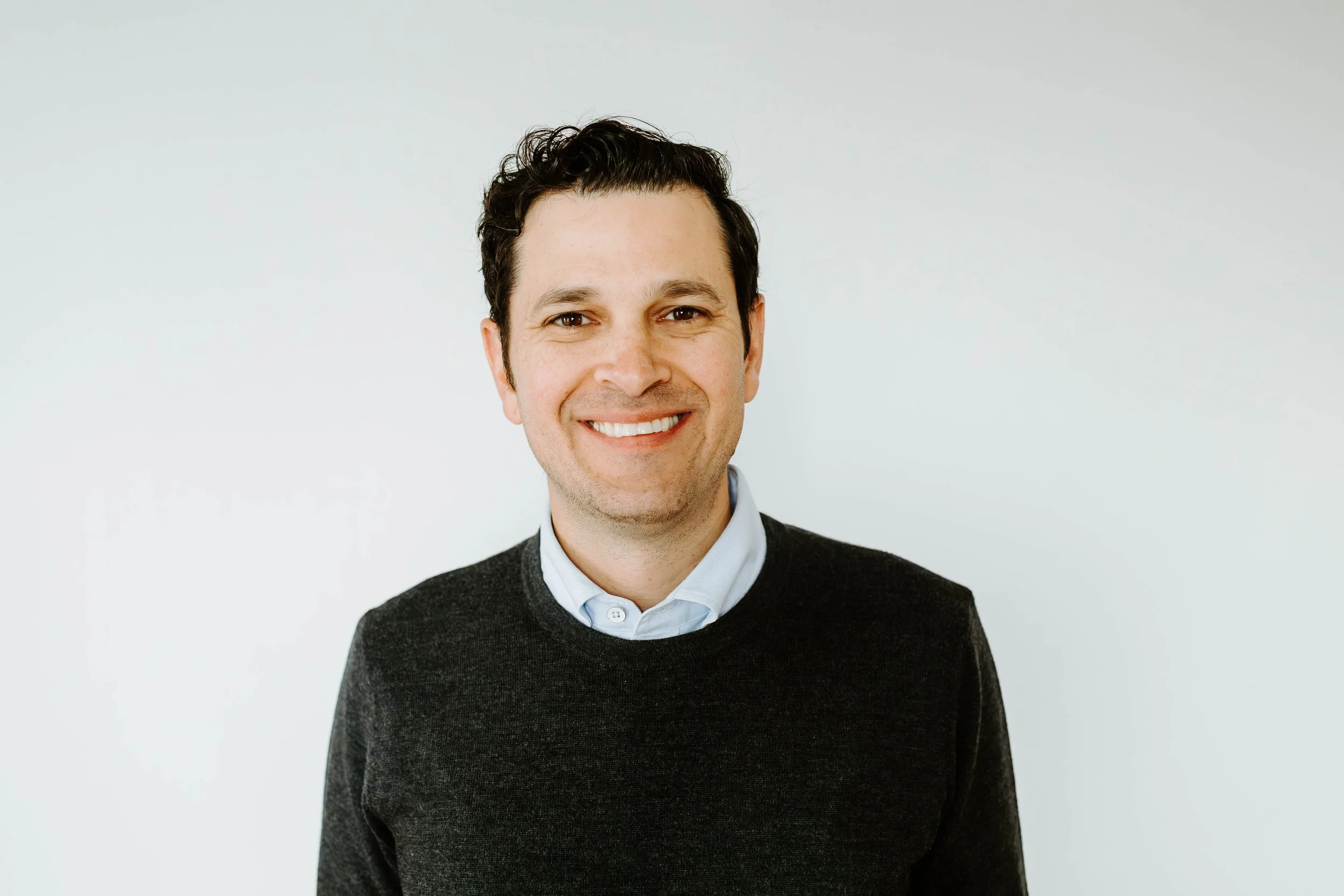
Episode 249: Shannon T.L. Kearns - Reading Scripture as a Transgender Christian
In this episode of The Bible for Normal People, Jared talks with Father Shannon T.L. Kearns, cofounder of Queer Theology, about engaging with Scripture as a transgender Christian, finding a better way to address clobber passages, and why reading the Bible from the margins is imperative for interpreting the biblical text honestly. Join them as they explore the following questions:
What or who is a eunuch?
What’s the significance of eunuchs in the Bible and why do some trans Christians identify with those stories?
Where can we find examples of “gender transgression” in Scripture?
How do stories of naming or renaming in Scripture resonate with trans Christians?
Why is it unhelpful to try and combat biblical “clobber passages” conservative Christians use to justify anti-trans and anti-LGBTQ+ prejudice?
How can we read the Bible more holistically instead of trying to see everything as a prooftext?
What have Shay’s church experiences been like, and how has reading Scripture in community kept his faith alive?
What are some red flags when it comes to looking for a LGBTQ+ affirming church?
How can trans Christians who still want to interact with the Bible start reading it from the margins?
Tweetables
Pithy, shareable, sometimes-less-than-280-character statements from the episode you can share.
We have these really fascinating stories all about eunuchs all through Scripture, and these stories are in conversation with one another in really interesting and unique ways. — @shannontlkearns
I think that this idea of a third gender feels comforting to trans folks, to know that there have been other people throughout history that have somehow not fit into binary genders. — @shannontlkearns
Jacob is someone who also stood outside of the gender binary. We see in Genesis that he was highly favored by his mother, spent his time in the kitchens, and was not manly like his brother Esau. — @shannontlkearns
We can't actually pull out a text and say, "This is what this means and this is condemning trans folks," without looking at all of Scripture. When I look at Scripture as a whole, I see this continual arc toward more inclusion, more justice, more room at the table. — @shannontlkearns
Whatever passages people are pulling out of context to condemn trans folks, that doesn't stand up when I read Scripture as a whole. — @shannontlkearns
Reading the Bible in that way (as a prooftext) is not an honest way to read Scripture. It's not how any scholars read Scripture. — @shannontlkearns
I see Scripture as a record of communities of people trying to make sense of their place in the world, what it means to be in relationship with the divine, and what it means to be in relationship with other people. — @shannontlkearns
We have to be reading from and with the margins in order to really understand how to continue to wrestle with these texts and these stories. — @shannontlkearns
I went on a process of what I would now call deconstruction, [although] no one was really using that term at this time, and really took my faith apart. And what I found on the other side wasn't a lack of faith, or an absence of faith, but was a really strong and deeply rooted faith. — @shannontlkearns
I think one of the things that is often really helpful for folks who are still really grappling with "what is the Bible, and how do I engage with it?" is to actually stop reading the Bible for a little while, and instead read books about the Bible. — @shannontlkearns
Mentioned in This Episode
Books
Shay’s book In the Margins: A Transgender Man’s Journey with Scripture
The First Christmas: What the Gospels Really Teach About Jesus's Birth by Marcus Borg and John Dominic Crossan
The Last Week: What the Gospels Really Teach About Jesus's Final Days in Jerusalem by Marcus Borg and John Dominic Crossan
The First Paul: Reclaiming the Radical Visionary Behind the Church's Conservative Iconby Marcus Borg and John Dominic Crossan
More about Shannon T.L. Kearns
Join: The Society of Normal People community
Support: www.thebiblefornormalpeople.com/give
-
Pete
You're listening to the Bible for Normal People, the only God-ordained podcast on the internet. I'm Pete Enns.
Jared
And I'm Jared Byas.
Intro
[Intro music begins]
Jared
Hey everyone, on today's episode of The Bible for Normal People, it's me, Jared, talking about reading scripture as a transgender Christian with Father Shannon T. L. Kearns. Father Shannon is the cofounder of Queer Theology, which has the longest running LGBTQ Christian podcast, the OG, and is also a writer and speaker. And, as you'll hear in the episode, he's an ordained priest in the Old Catholic Church, and he recently released his first book "In the Margins: A Transgender Man's Journey with Scripture." So make sure you pick up a copy. I'm excited for you to hear from him. So let's get into the episode.
Intro
[Transition music to signal the preview of the episode]
Shay
[Teaser clip of Shay speaking plays over music] “When I look at Scripture as a whole, I see this continual arc toward more inclusion, more justice, more room at the table, that says to me that whatever passages people are pulling out of context to condemn trans folks, like, that doesn't stand up when I read Scripture as a whole.”
[Music transitions back into intro music to signal the start of the episode]
Jared
Well, welcome to the podcast Shay, it's great to have you on!
Shay
Thanks so much for having me. I'm really excited about this!
Jared
We're gonna jump right in, because this is something that we don't talk often about at The Bible for Normal People, but I really appreciate your perspective. So can you tell us more about eunuchs in the Bible? And then we'll talk a little bit more about why transgender Christians maybe identify with eunuchs in the Bible and how all that works together. But let's just talk about eunuchs in the Bible first.
Shay
Yeah. So like, I don't know about you, but I grew up reading the Bible a ton and never really realized that eunuchs were there. [Laughs] Or like, I don't remember learning about eunuchs in Sunday school, let's put it that way. So it was fascinating to kind of come at the stories of eunuchs and realize that stories of eunuchs are all over Scripture, from the Hebrew scriptures, to the Christian scriptures, like they're just all over the place. And I think it's really interesting to look at how that narrative kind of tracks throughout scripture. Right? So you have both stories where eunuchs show up in really powerful ways—like in the story of Esther, for instance. It's the eunuchs that work in the court that are able to pass messages from Esther to her supporters on the outside. So that's like a moment where a eunuch shows up and does something really cool.
And then obviously, in the Christian scriptures, we have the eunuch from Ethiopia in Acts 8, the first Gentile convert—really, really beautiful story there. But then we also have in the Hebrew scriptures, kind of two interesting passages about eunuchs kind of more circumspect, right? That we have the prohibition in Deuteronomy about anyone whose genitals have been crushed, which is when Deuteronomy was written, this is the time when the people of Israel are coming back from exile, many of the men have been forcibly castrated and so we have all of these men who are now eunuchs, who are coming back, and there's this kind of prohibition about whether or not they're able to worship and be a part of the temple practices. And then we have this beautiful passage in Isaiah which talks about the eunuchs and says, you know, "don't let anyone say that eunuchs are a dry tree, or that they're going to be cut off, that I'm gonna give them a name better than sons and daughters." And so we have these really fascinating stories all about eunuchs all through Scripture, and that these stories are like in conversation with one another in I think really interesting and unique ways.
Jared
Well, maybe we can back up even further just real quick, because I just thought, when you said “growing up,” I actually did know about eunuchs, but I actually don't think I ever knew what a eunuch was.
Shay
[Laughs] Right, right.
Jared
So, maybe for people, what is a eunuch when we're talking about where we find them in Scripture?
Shay
Yeah, so the idea is—at least in the Hebrew scriptures—it seems to be folks who have been forcibly castrated. So this was often in Israel's history when they are taken into exile and when they're taken away from their homes. Many times men of a certain stature are forcibly castrated so that they can work in palaces and in places higher up as servants for kings, pharaohs, etc. and not be a threat to lineages, right? No one's gonna get pregnant and be able to blame the eunuch. Let's put it that way.
And so we have then the stories of men who have been castrated, and then it becomes later on almost a function of a third gender, that these are people who—and again, we don't know how they would have been consider themselves—but in society, they are now no longer considered men, but they're also not women. So they become this kind of ungendered, third space. Now, by the time that Jesus rolls around, it feels like eunuchs are a little bit more complicated and murky because there's a passage in Matthew where Jesus talks about, "there are some who have been made eunuchs, there are some who have chosen to be eunuchs, and there are some who are born eunuchs." Scholars have been debating and arguing over what that passage means for forever. [Chuckles] Like, we're not going to solve that today. But it does feel like something was happening around that idea of being made eunuchs or choosing that—that feels more murky than people who are being forcibly castrated when they're being taken out into exile.
Jared
Okay, wow, that's really helpful. So I know the first time I heard about this was, you know, friend of the podcast, Austin Hartke—I think when he was on, he mentioned it, and we sort of had to fly by because we had a lot to talk about. But could you do a little more deep dive on why transgender Christians often will identify with eunuchs in the Bible?
Shay
Yeah. So I think that this idea of a third gender is something that is—I don't know if "appealing" is the right word—but it feels comforting to trans folks, to know that there have been other people throughout history that have somehow not fit into binary genders. I think that identifying eunuchs as trans is complicated, and it's a little fraught. I think anytime we're trying to read 21st century identities back in time, we're already in dangerous territory. So like, I just want to name that. We don't know how any of these people would have chosen to identify. And I also think it's a little bit fraught to say that people who are forcibly castrated, that that has anything to do with trans folks, who like very much feel that this is an intrinsic part of their identity—that being trans isn't forced upon us. It feels especially important to name that right now, in a culture that is saying that we're grooming kids or that kids are being tricked into being trans that like, that's not true. So I just want to like, name all of those complexities.
And also, I do think that there is something especially in this Matthew text about, you know, there are people that, for all of time, have existed outside of binaries, and that have found themselves in spaces where they didn't fit. And that eunuchs somehow give us a sense of belonging, a sense of inclusion, and that when we see texts like Isaiah, which says, "I will give the eunuch a name better than sons and daughters" and when we see this text in Acts about the eunuch from Ethiopia being baptized and being given entry into this new community, we see stories of inclusion of people who would have been outsiders and who would have existed outside of binaries. And I think that that is really appealing for trans and non-binary folks.
Jared
Maybe getting more personal for you—what are other Bible characters and stories, what do you identify with in the Bible as a transgender Christian, like, what resonates with you from the Bible as it touches on that particular part of your identity and who you are?
Shay
I mean, I think this is the beauty of like reading scripture from the margins, right? Reading from our own perspectives and identities, is that we don't have to look for those one-to-one comparisons, we can look at the places where there are resonances more broadly. So like, for me, I found a lot of comfort in the story of Jacob and, in particular, this idea of like, Jacob being someone who wrestles with God, and that is something that has been part of my trans experience, but also as part of my like religious experience more broadly. This example of someone who was willing to wrestle with God, and that—that was something that was blessed and honored, and not something that considered him a backslider, or whatever [chuckles] the people in the church would often say about, you know, people were asking hard questions and wrestling. So that's been a story that has a lot of resonance for me.
And I think too, like Jacob is someone who also stood outside of the gender binary. We see in Genesis that he is someone who was highly favored by his mother who spent his time in the kitchens and was not manly, like his brother, Esau. And I think more broadly, there are all sorts of stories of gender transgression in scripture from really strong women who step outside of the roles that were assigned to them to men who prefer the company of women and spend their time in the kitchens. This idea that there is a biblical vision of masculinity or femininity is wild if you actually read Scripture. [Laughs] I find lots of resonances of people who challenge gender norms and stand outside of binaries all throughout Scripture.
Jared
That's interesting, I hadn't ever thought about it that way, I think that's a really helpful... What it's doing is also reminding me of gender as a construct of femininity and masculinity and how we do see that even in the story of Jacob, again, highly favored by his mother, spending time in the kitchen, that that is also outside of, kind of, what we would call like the norm of biblical masculinity or whatever I was taught.
Ad Break
[Ad break]
Jared
One thing that I keep coming back to is the naming of things. What is it in the story of a lot of trans folks that, you know, thinking of Jacob, and I think you had mentioned, Isaiah, "they’ll be given a name." Are there other instances of that? And/or why does that play a prominent role?
Shay
Yeah, I mean, I think many, many trans folks—not all—but many choose a new name when they transition, a name that better reflects their identity. And so I think that there are lots of stories of naming in Scripture and when people's names change, it's usually a moment to pay attention because they are stepping into some kind of new role in community. Right? It's never a name change for name change's sake. It's always a story of, "you have to have a new name because you are now inhabiting a new posture in your community." You know, when Abraham and Sarah's names change, Jacob, after he wrestles with the angel, his name changes to Israel, we have Peter’s name change in the Christian scriptures. I think that is a moment where people pay attention. And it says, it sends a signal like this person is going to have a different role now in community.
And I think for many trans folks who have chosen names that are really meaningful to them, or that have deep resonances both of how they identify now—but many folks are choosing names that also have some kind of familial or history connection—but then also, when they embody that new name, they're showing up in a different way in community, and they're inviting people in their community to recognize that they're showing up in a different way. And I think that's a really beautiful thing. I think it's why it's so important for folks that maybe are from liturgical traditions, or who are still invested in churches, that they be offered the opportunity to have a name change ceremony in their religious community because it's not just about, “Oh, I'm changing my name and I'm asking you to use my new name and to see that I'm in a different role in this community now.” And that's important.
Jared
One thing again, that strikes me already in the conversation is this idea of just, you know, my tradition growing up, it would have been a lot about, well, “I'm not going to do that, that's not biblical,” you know, sort of this very strict understanding of what's biblical. And already twice here, we've already sort of challenged that. Well, name changes are very biblical. So there's got to be something else going on, then, like, sort of, "It's against my religion to call you by your chosen name." It's like, it's very biblical to call people by a chosen name. It's very biblical for protagonists and model characters, not even, you know, even characters in the Bible that clearly from the author's perspective, we’re supposed to be looking up to as model people like Jacob. They don't fit into the gender norms of today. And so, it's sort of...You don't have to look hard to find examples of where the Bible doesn't fit how it's often being used today. So that does tie into you know, the flip side of these are how Christians will often use the Bible to sort of clobber or to be against transgender Christians. And I was wondering if you would share some of those clobber passages that conservative Christians will often use against transgender Christians?
Shay
Yeah, I think that this question is so interesting and so important. And also, it's a question that I think we have to really subvert. Because there's this idea—and not just with trans folks, but with LGBTQ+ people in general—that if we can just find the right argument to these verses, if we can just go in and say, "Well, you know, actually, they were translated wrong," or "The historical context is such…" and I think that what that does is it actually cedes the argument to conservatives to say that the way that they're reading Scripture is the one right way to read Scripture.
So anytime I'm asked about the clobber passages, I always want to like, flip the question on its head and be like, actually, it's not about those passages. Because you can take anything out of context throughout Scripture. It's not that I don't have an answer to those passages, it's that I actually don't find that reading the Bible in that way, as a prooftext, as a verse-by-verse is actually, to me, it's not an honest way to read Scripture. It's not how any scholars read Scripture. And so I think that we have to, like push back against that question.
And so for me, it's like, if I can look at the breadth of scripture, and see all of these places where gender norms are being violated and where that's totally okay—and not only totally okay, but like, often that is rewarded. And then I also understand that Scripture is a library of books that are often in conversation with one another. That we can't actually pull out a text and say, "This is what this means and this is condemning trans folks," without looking at all of Scripture and when I look at Scripture as a whole, I see this continual arc toward more inclusion, more justice, more room at the table—that says to me that whatever passages people are pulling out of context to condemn trans folks, like that doesn't stand up when I read Scripture as a whole.
Jared
Maybe we can go a little further because I really appreciate that perspective. That this comes down to our view of the Bible. What is it? And what do we do with it? Which are the two questions we ask the Bible for Normal People all the time. And by entering the conversation about a clobber passage, we've already assumed so much about what the Bible is and what we do with it. Can you paint a little bit more of a vivid picture of how you approach the Bible? Because I think for a lot of people, that's where they get tripped up, where they don't want to read the Bible that way anymore but a lot of their community still reads the Bible that way and they don't have a vision for what's next, like, "What else do I do?" And so they end up falling back. And then they get trapped into like, just arguing tit-for-tat on proof texts, rather than having a different vision for what the Scripture is, and how it can be utilized in a life of faith.
Shay
Yeah, I mean, for me, I see Scripture as a record of communities of people trying to make sense of their place in the world, what it means to be in relationship with the divine, and what it means to be in relationship with other people. And so we see in this record, a lot of mess, [Laughs] right? It's really complicated, and a lot of trying to make sense of, if bad things are happening, why is that? And what does it mean, for me, to relate to the divine if my people are in exile? What does it mean to relate to the divine if plagues are happening, or famine? And so we see, especially in the Hebrew scriptures, a sense of people who are saying, and trying to make sense of, bad things are happening and so it must be like "God is angry at us," or bad things are happening, therefore, "we did something wrong, we weren't pure enough." And so that's why we have all of these purity codes. “If we just did things better and more right, then we will be protected from a capricious God.”
And I think, for me, it's like not the sense that then God becomes more loving in the Christian scriptures. I think that's both like, anti-semitic and also not helpful. But it's like people are starting to understand, "Oh, maybe God isn't capricious in the way that we thought God was," like when we didn't understand science, or we're at the mercy of empires or plagues. So we have, again, this record of people really wrestling. And so the question for me then becomes: What do we do with it? Well, we continue to wrestle, and we continue to figure out both what does it mean to be a part of a lineage and a community of people of faith who have wrestled with the divine and tried to figure out how they related to the divine? I think we're still asking all of those same questions. What does it mean, for me as an individual, to be in relationship with God? What does it mean for me to be in relationship with my community? What does it look like to live justly in the world? And so that we have now this record to draw upon that still informs and influences our lives.
And also, we're still doing that same wrestling of trying to figure out what does this look like? What does it mean to live ethically under capitalism? What does it mean to be a part of an empire that is the United States? What does it mean to live out our faith in a world that has people of lots of faiths and no faith? Like what does it look like to be a good neighbor? And so I think for me, these are sacred texts because people have been wrestling with them for millennia and that our job is to continue to wrestle with them, and to continue to be a part of that conversation, and to answer those questions in community.
And that's why it's so important for me to always read Scripture in community, and to also be reading it in community with marginalized people. I don't think sitting around with people who are not marginalized, reading this text, is helpful—that readings that have come from the margins have always been, I think, truest and most honest to the people that were originally writing these things down, and that continue to pull out the most truth today. So like, when you're reading liberation theology, and Black theology, and womanist theology, and queer and trans theology, I feel like we're getting closer to the heart of what these texts are about and who has always been impacted by empire, and who's continuing to wrestle, and that we have to be reading from and with the margins in order to really understand how to continue to wrestle with these texts in the stories.
Ad Break
[Ad break]
Jared
What comes to mind is this picture of growing up where the Bible is this non-human thing that kind of pulls us out of our humanity. It's like, supposed to save us from our humanity in some abstract sense. But to have a record of a people trying to make sense of God and humanity, it really brings it into like, "Oh!" Because immediately, when you started saying that, I said, "Oh, well, that's... That's just us. That's what we're trying to do." And so I always had this view of, somehow, that everyone was more godly back in the old times. Like they got more direct revelation from God and I always love when I read the text, and I don't have that view on and something breaks through, and I'm like, "Oh, wait, they were just doing the same thing we're trying to do, which is like, figure out this relationship with God and with our community. And if there's something..."
I think there was a time when that felt like a relief to have this non-human, inerrant thing that fell from the sky but I think for a lot of us, we're actually finding a lot of relief in the humanity of it to say, "Oh, this is something I can actually relate to, rather than something I have to live up to and can never do that." I just really appreciate that perspective on the Bible. And again, I think you're right, it comes down to; What is the Bible and what do we do with it? And those are very different understandings of the Bible that lead to very different understandings of the Christian life. Which leads me to my next question. We have the Bible and what it is, but you talked about reading it in community. And that leads me to want to ask the question: How have you navigated church life? What's your story? How did you, you know, when we introduced you, it was "Father Shannon." So, you're an insider. I mean, you're kind of a church nerd. So…
Shay
Yeah, yeah.
Jared
Tell us a little bit more about your story and how you ended up where you are.
Shay
Yeah, so I grew up in fundamentalist evangelicalism. I probably wouldn't have used either of those terms, growing up. [Laughs] It was just like, we were the right kind of Christian. But now looking back, it's like, "Oh, no, we were a fundamentalist evangelical church." And really was heavily heavily invested in that church. That shaped all of my growing up. My family all went, I was homeschooled from seventh through 12th grade. So like, the church became my entire social life. It was my youth group. It was my peer group. It was how I spent my summers and Sundays and everything during the week. So I was like in it, and went on mission trips, whole nine yards—I actually rapped at Liberty University one summer. So that's—
Jared
So we have that in common. [Laughing]
Shay
A story that I'm both like-
Jared
[Laughing]
Shay
-Embarrassed by and [Laughs] also part of my journey-
Jared
-Were you, like, solo or were you like, part of a rap crew?
Shay
It was me and I had a beatboxer with me. So you can imagine that. [Chuckles] And yeah, and stayed in that tradition up through college, went to an evangelical college that was affiliated with the church that I grew up in—Grace College in Indiana—and it was in college that I started to, I think, like, really ask questions for the first time. And it wasn't necessarily questions about, "I don't think Christianity is right," it was more like, "I'm not sure that the way I'm being taught about Christianity is all there is, it feels like there's something missing." And it felt like the more I asked questions, the angrier people around me got. And that also, like, as someone who…I love to read, I'm a huge nerd. I thought like, I don't know, it feels like someone who's engaging in faithful questioning shouldn't be shunned, like you should have an answer [Laughs] for my questions. And the fact that you don't or like aren't willing to engage? That's making me question even more. So I kind of went on a journey post-college, I no longer wanted to have a faith that I felt had been handed to me, I really wanted to say, “this is a faith that I've chosen for myself. I believe these things because I actually believe them, and not because someone has told me to believe them.”
And so I went on a process of what I would now call deconstruction. No one was really using that term at this time. And really like, took my faith apart. And what I found on the other side wasn't a lack of faith, or an absence of faith, but was a really strong and deeply rooted faith. And for me, it was like, "Oh, no, I'm... This Jesus story. Like I am all in." Like, I am heavily, heavily invested in this. And I still want to be a part of a religious community and a church. I want to walk with people who are asking hard questions and trying to figure out what it looks like to be in community.
And so I went through a wide variety of denominations, I'd worked in a bunch of different churches. But then I found the Old Catholic Church, which is an independent progressive Catholic group, not in communion with Rome. They ordain women, LGBTQ folks, people who are married, partnered, and divorced, and started the ordination process with them. So I was ordained, the first openly transgender man ordained in the Old Catholic priesthood. And this was about 10 years ago now. And it's been a great fit and a great home. And now a lot of my work looks like digital ministry, it looks like walking with and working with LGBTQ folks who are trying to figure out how to integrate their sexuality and gender identity and their Christianity. Sometimes it looks like helping people to leave Christianity well, because there's been too much harm done. So it's a really wide, wide range.
And often working with folks who don't have access to an affirming community near where they are, or who do have access, but also need a place where they can just be like super, super queer and trans and they don't feel like—even though their community as affirming, they maybe can't bring them their whole selves, or that they need another space of folks who like really, really get what it's like to have to grapple with gender identity and sexuality in church.
Jared
I'm going to ask a personal question, feel free to answer it or not. But I think about this, because I think a lot of people are also in this place of trying to find a community and it's like, there's these painful experiences of where you think you find someone somewhere that's going to be welcoming and it turns out not to be. That's not just for LGBTQ, but also just questioners and doubters. Do you have some personal stories of where you kind of fumble along in your church story until you found the Old Catholic Church? And how did you...How did you navigate that in a way that you still wanted to pursue ordination when you got through the gauntlet?
Shay
Yeah, I mean, I think that there's a couple of things there like one is just that I'm stubborn. [Chuckles] There's a part of me that's like, you don't get to take away church and community. Like, it's mine, too. And so I'm gonna, I'm gonna be a burr under your saddle, if that's what I need to do.
Jared
Yeah.
Shay
Yeah. And I do, I mean, I do think that there is something to me in being able to wrestle with other people that are thinking through hard things. And I will say, you know, I have been a part of, of churches where they were on some kind of journey, right? Like, they were affirming, but they didn't quite know what to do with trans folks. And so some of that is you figuring out as an individual—”how much education do I have the bandwidth to do in this space?” I always will say, if you are a part of a church that is not fully affirming, and you're trying to like get them there, that that can't be the place where you're also getting spiritual nurturing. Like, you can't both be an activist, and get your spiritual needs met in the same place. And so like, if you're a part of a church that you're trying to get to move, you also need to have some other community where you're just getting your needs met. So I think that that's important to name.
And then there's like the spectrum of folks that like, really are affirming but don't always get it right. And that, to me, I have a higher tolerance for that, I think, because I've been around it so much. And so like I'm often willing to be in the mess with folks as they're trying to figure out like, what does affirmation and welcome actually look like? But I totally get it for folks that like, if you don't also have some kind of really core community who does affirm you, that being in a space where people are fumbling—like that might not feel safe or good or be a place where you can invest. And so, figuring out for me, it'd be like figuring out what questions do you need to ask before you even enter into a community to kind of suss out if it's safe.
I often really recommend folks look at, you know, church welcome statements. If a church website doesn't have a welcome statement, that's a really big red flag to me. If you reach out to a pastor with questions, and they respond with anything other than a clear answer, if they ask you out for coffee, like run. [Chuckles] That's not going to be an affirming church. Anyone who won't put into writing, “this is what we believe around queer and trans folks,” is gonna try to pull you in and will do harm to you. So like, those are some kind of tricks [Laughs] that I've learned over the years of like, "Oh, if someone asked me out for coffee, and won't answer my question, that's a no."
Jared
That, I mean, that's very practical and I think very helpful. It just rings true for a lot of my experiences as well. So I appreciate how clear and articulate you were in just stating that. So as we wrap up our time, I want to maybe, if we can, focus on transgender Christians who might be listening, specifically around the Bible. Because I think there might be a lot of listeners who are wrestling with their sexuality and wrestling with where they fit, and also very much wrestling with the Bible and have had that be, again, weaponized and used in certain ways.
Where would you recommend transgender folks start? If they're stubborn, too, if they don't want to give up their Bible, they don't want to give up the church quite yet, you know, who knows? Maybe they will eventually. Where would they start? How do you start to unpack? And, I think I'm thinking broadly of this view of the Bible that we talked about earlier, start to change our view of the Bible—but also just specifically, that they can start to read the Bible from the margins and see themselves in it. Rather than seeing how it's been weaponized and used against them.
Shay
I think one of the things that is often really helpful for folks who are still really grappling with "What is the Bible, and how do I engage with it?" is to actually stop reading the Bible for a little while, and instead read books about the Bible. So I have found the books by Marcus Borg and John Dominic Crossan, in particular, they have three: First Christmas, The Last Week, and something about Paul—I can never remember the Paul title [Chuckles]—but those three books are really, really fantastic in pulling out all of the kind of historical and political things around the Gospels in particular, and then obviously, Paul in that one.
And I found that by starting to do that, it all of the sudden breaks open the text, and you're like, "Oh, there is so much more happening here that I was not aware of when I was reading the Bible as inerrant and infallible." Like, there's just so much more under the surface and that, even that kind of first shift, and distance, I think helps people to start to say, "If I didn't see that before, what else might have been missing?" And to then go back into Scripture with a lot of curiosity, and just start asking a lot of questions. And so that, for me, is step two. It's like, pick a text to work with, a story, preferably, and just start asking a lot of questions. And then start chasing down some of the answers. Like, buy a commentary or two, do some Googling, and really dive into like, how might this text have been heard when this story was first told? How might it still be resonating today? And that's when you start to then see, "Oh, I might be able to see myself in this text." Like, “there's some kind of binary breaking that's happening here,” or “this person was an outsider, and yet they're coming to Jesus, and Jesus is like, not treating them like an outsider. I've had that experience!"
And then you start to really go further and further into, "Oh, there are all sorts of ways in which these stories can continue to speak today, that I can see my own self reflected in them, that I don't have to be afraid of these stories,” right? Like I can claim these stories too and that they can be meaningful and beautiful and then they can be sacred again, and that they don't have to be a weapon or a shield, that they can be a comfort and a balm and a challenge, right? The texts remain challenging, but that usually shifts someone's posture enough to be able to really go back in with curiosity, and to have some fun with the texts.
Jared
Well, thank you so much, Father Shannon, for jumping on and having a conversation with us. And again, for me, I can just affirm how much I learned from folks on the margins about the Bible and how to read it. It has been one of the great joys of doing this podcast, is having different perspectives than I would have never been able to have. And that folks like you, guide, and direct, and teach us so much about the Bible and so much about faith. So thanks so much for coming on and sharing.
Shay
Oh, it's my pleasure. This was really great.
Outro
[Outro music begins]
Jared
Well, thanks to everyone who supports the show. If you want to support what we do, there are three ways you can do it. One, if you just want to give a little money, go to TheBibleForNormalPeople.com/give.
Pete
And if you want to support us and want a community, classes, and other great resources, go to TheBibleForNormalPeople.com/join.
Jared
And lastly, it always goes a long way if you just wanted to rate the podcast, leave a review, and tell others about our show. In addition, you can let us know what you thought about the episode by emailing us at info@thebiblefornormalpeople.com.
Outro
You've just made it through another episode of the Bible for Normal People! Don't forget, you can also catch the latest episode of our other show, Faith for Normal People, wherever you get your podcasts. This episode was brought to you by the Bible for Normal People podcast team Brittany Prescott, Savannah Locke, Natalie Weyand, Stephen Henning, Tessa Stultz, Haley Warren, Nick Striegel, and Jessica Shao.
Outro
[Outro music ends]