Topics
- #church history 1
- #cultural and social issues 1
- #doubt 1
- #politics 1
- Amy-Jill Levine 1
- Andrew Perriman 1
- Austen Hartke 1
- Austin Channing Brown 1
- Bible for Normal People Season 1 27
- Bible for Normal People Season 2 39
- Bible for Normal People Season 3 41
- Bible for Normal People Season 4 40
- Bible for Normal People Season 5 40
- Bible for Normal People Season 6 6
- Bible for Normal People Season 8 1
- Biblical Interpretation 140
- Brian Walsh 1
- Canonization 13
- Cheryl Bridges Johns 1
- Church History 44
- Cultural & Social Issues 70
- Deconstruction 34
- Doubt 34
- Elizabeth Enns Petters 1
- Ethics & Morality 13
- Faith for Normal People Season 1 1
- God 34
- Jared Byas 5
- Jennifer Knust 1
- Jesus 29
- Jonathan Martin 1
- Jonathan Walton 1
- Judy Stack 1
- LGBTQ+ 8
- Linda Kay Klein 1
- New Testament 48
- Non-Christian Religions 24
- Old Testament 75
- Pete Enns 10
- Pete Holmes: 1
- Pete Ruins 3
- Politics 24
- Propaganda 1
- Race & Justice 13
- Rachel Held Evans 1
- Rhonda Burnette-Bletsch 1
- Richard Rohr 1
- Robert Alter 1
- Salvation 10
- Science 3
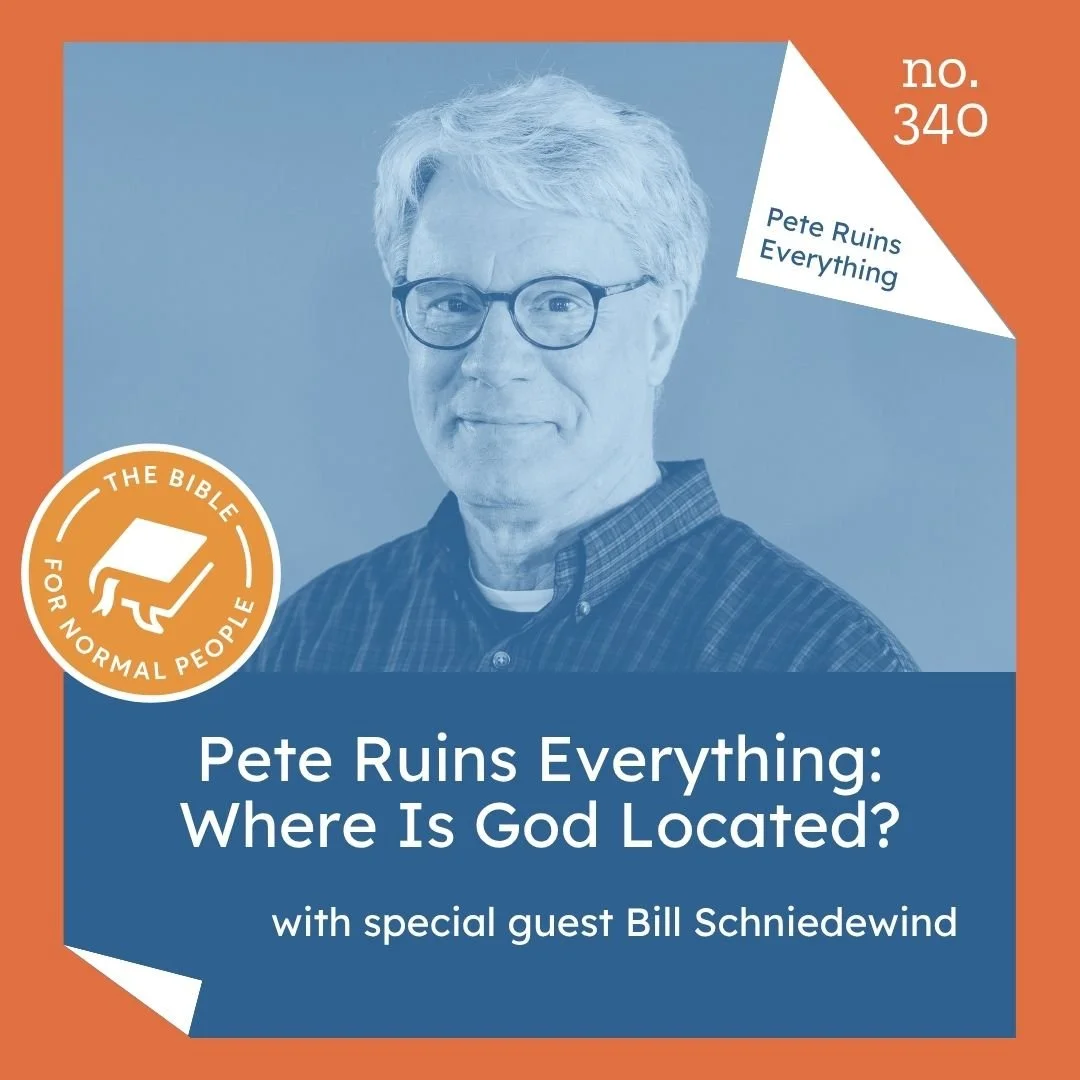
Episode 340: Pete Ruins Everything with Bill Schniedewind
In this week’s episode of The Bible for Normal People, Pete talks with biblical scholar Bill Schniedewind about where God is located in the Hebrew Bible and how different understandings of divine presence developed throughout ancient Israelite religion. They explore the archaeological and biblical evidence surrounding temples, sacred spaces, the Ark of the Covenant, and the centralization of worship in Jerusalem, challenging the idea that Israelite religion followed a simple progression toward one centralized system. Together, they consider the Bible’s competing visions of God’s presence, the tensions surrounding political and religious authority, and how those unresolved tensions reflect the complexity of both Scripture and the human search for God.
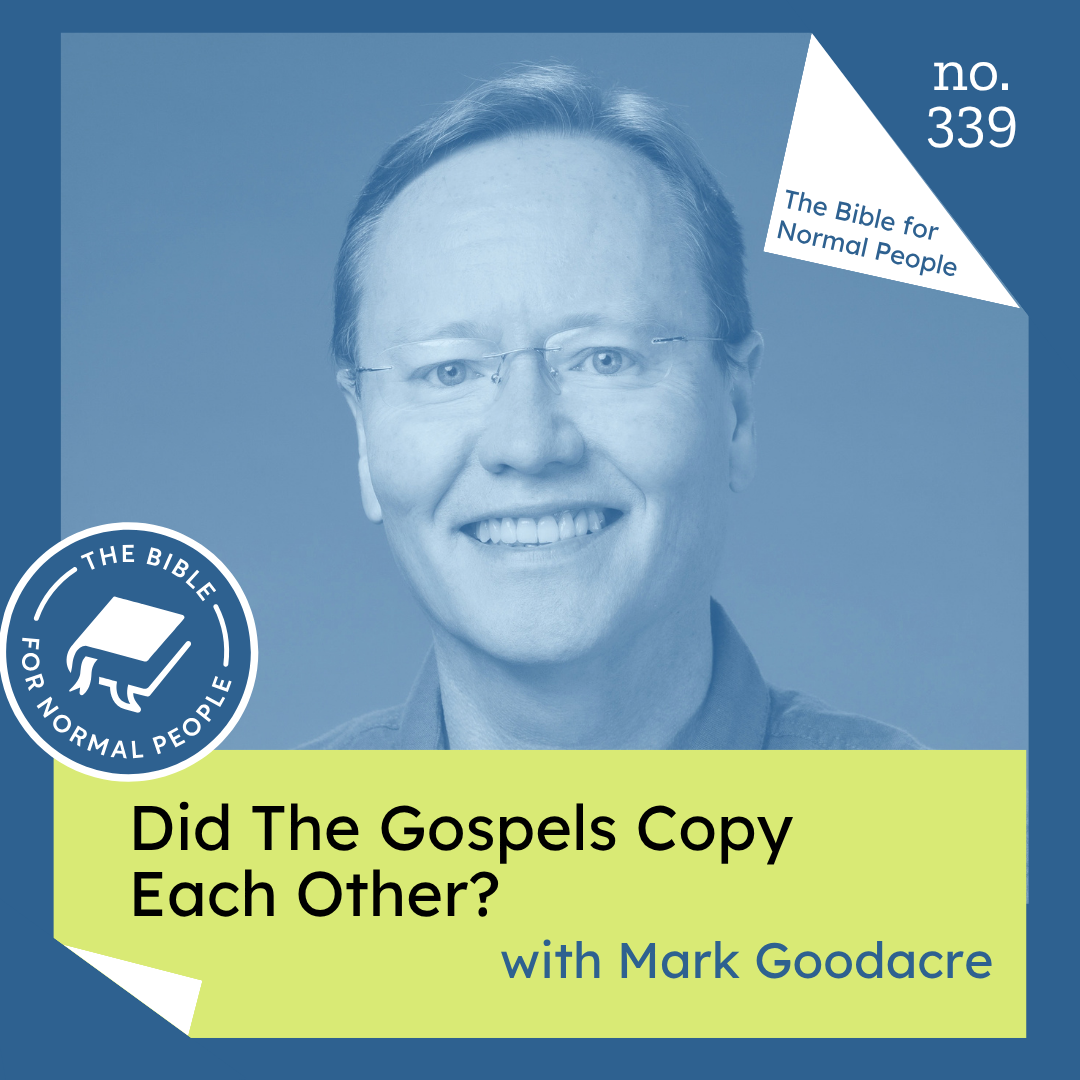
Episode 339: Mark Goodacre - Did The Gospels Copy Each Other?
In this week’s episode of The Bible for Normal People, Pete and Jared talk with Mark Goodacre about the synoptic problem and what the striking similarities and differences between Matthew, Mark, and Luke reveal about how the Gospels were written. They explore why scholars think Matthew and Luke used Mark, the debate over the hypothetical source Q, and the evidence that Luke may have known Matthew. Together, they consider how Gospel writers intentionally revised and reshaped earlier accounts, what those disagreements reveal about the development of early Christian theology, and how recognizing these differences can change the way readers understand Scripture as a whole.
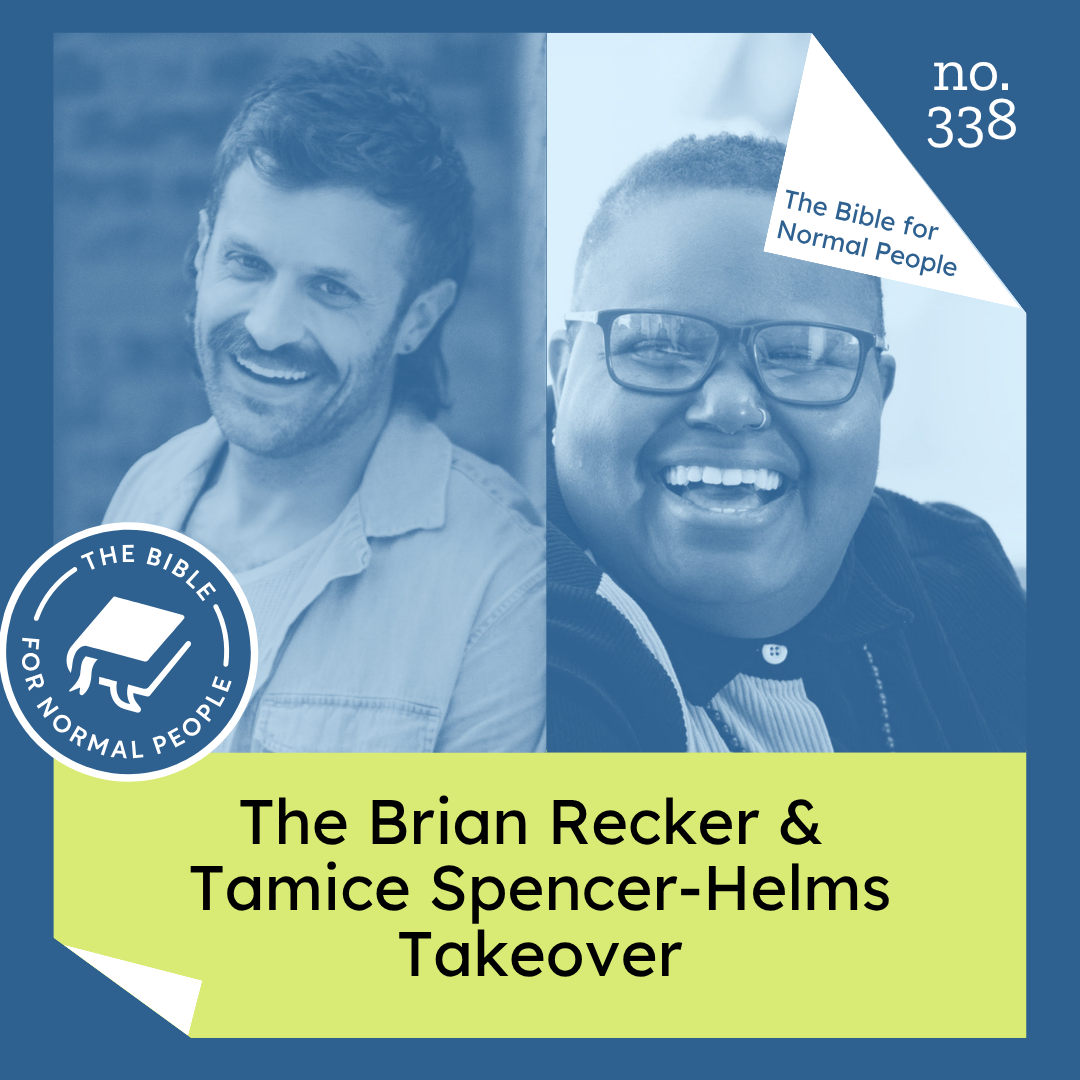
Episode 338: The Brian Recker and Tamice Spencer-Helms Takeover
In this week’s episode of The Bible for Normal People, Brian Recker and Tamice Spencer-Helms celebrate the podcast’s 10th anniversary by talking with Pete Enns and Jared Byas about how their relationships with the Bible, faith, and certainty have evolved over the past decade. They reflect on the costs of questioning evangelicalism, the ways The Bible for Normal People has helped people hold onto a love for Scripture while letting go of rigid interpretations, and how lived experiences from people of color and LGBTQ+ communities have expanded their understanding of what it means to read the Bible. Together, they explore Scripture as a “means of grace,” the freedom of admitting what they don’t know, and the possibility of having conviction without certainty.
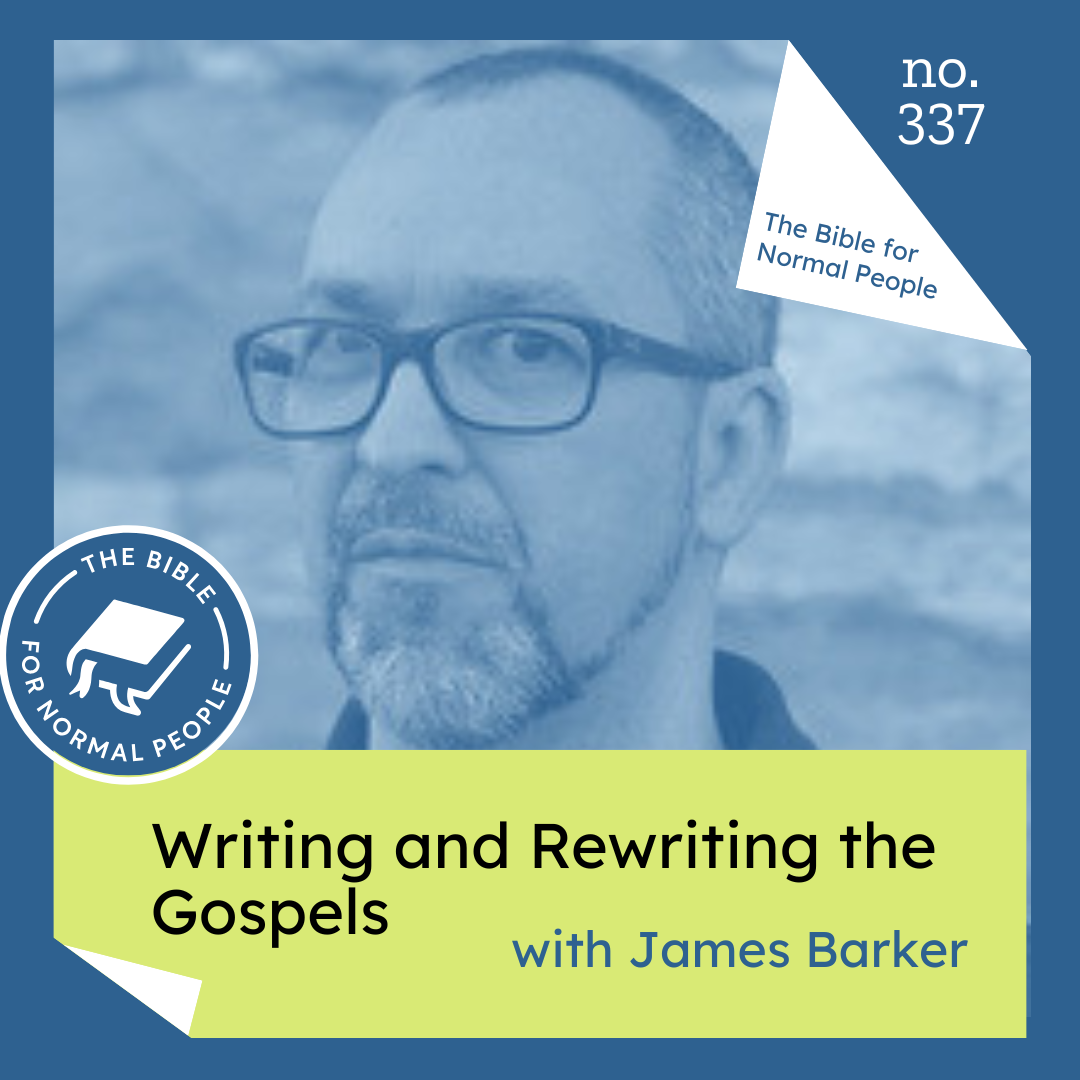
Episode 337: James Barker - Writing and Rewriting the Gospels
In this week’s episode of The Bible for Normal People, Pete and Jared talk with James about how the Gospels were written, how Matthew, Mark, Luke, and John relate to one another, and what ancient writing practices can teach us about the formation of the New Testament. They explore why the Gospel writers may have intentionally adapted and reshaped earlier accounts, how John builds on the Synoptic Gospels, and how Paul’s theology may have influenced the Gospel writers in surprising ways. Together, they invite listeners to let each Gospel speak in its own distinct voice, reconsider assumptions about how the Bible was written, and appreciate the deeply human process through which these texts took shape.
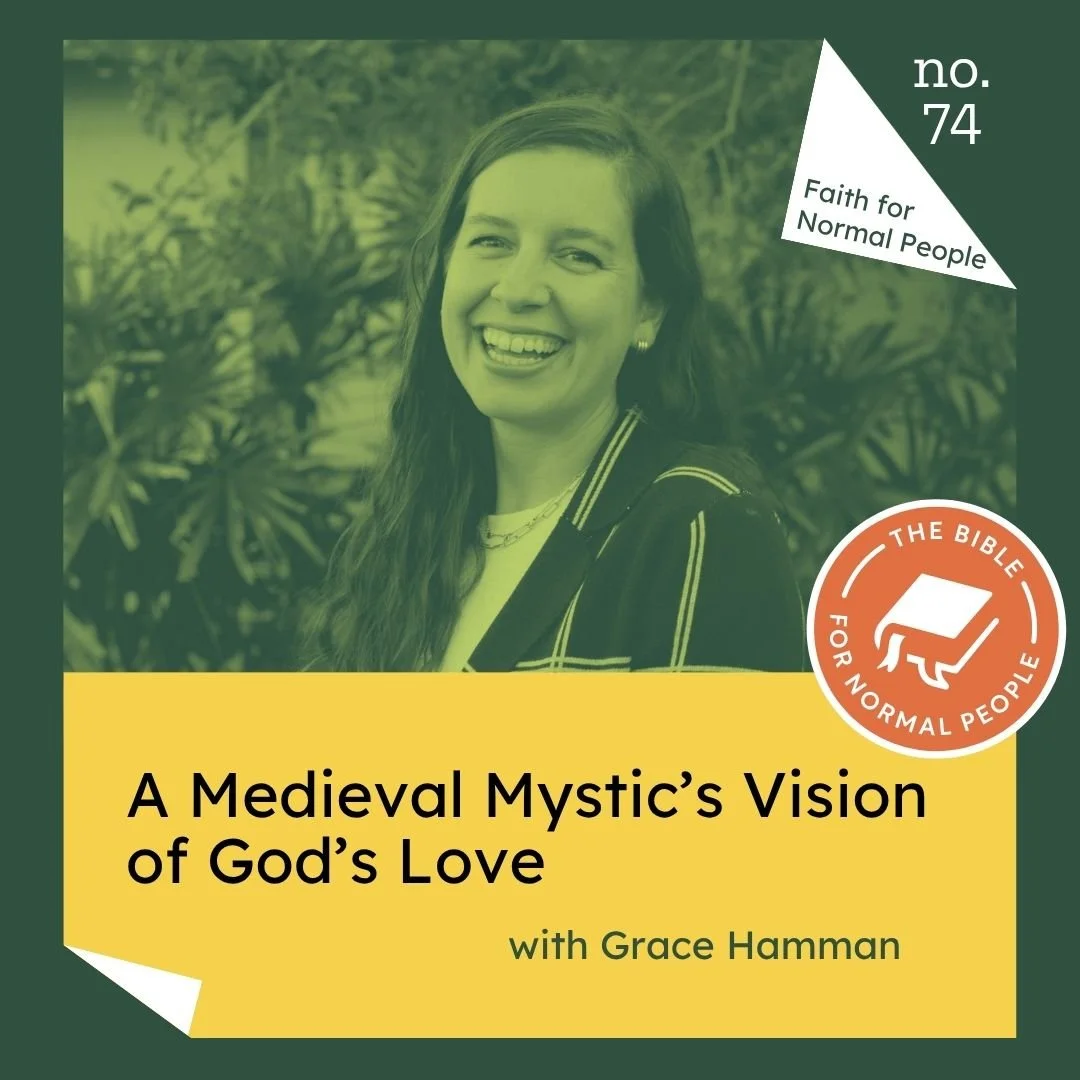
Episode 74: Grace Hamman - A Medieval Mystic’s Vision of God’s Love
In this week’s episode of Faith for Normal People, Pete and Jared talk with writer and scholar Grace Hamman about Julian of Norwich, her mystical visions, and her radically intimate understanding of God’s love. They explore Julian’s depiction of Jesus as a mother, her approach to suffering and hope in the aftermath of the Black Death, and her insistence that “all shall be well” is not a simplistic promise that everything will turn out fine, but a hard-won hope in the midst of suffering. They also consider what Julian’s example can teach those navigating deconstruction, questions of authority, and the tension between personal spiritual experience and institutional tradition, inviting listeners to embrace a more nuanced way of engaging faith, Scripture, and the wisdom of the past.
Episode 336: Pete Enns - Pete Ruins Everything on Lamentations
In this week’s episode of The Bible for Normal People, Pete explores the book of Lamentations and what it can teach us about faith in the midst of suffering. He examines the book’s historical setting in the aftermath of Jerusalem’s destruction, its raw and unsettling portrayals of grief, anger, and God’s apparent absence, and the ways its carefully structured poetry gives shape to experiences of trauma and loss. He also considers how Lamentations challenges modern Christian assumptions that faith requires certainty, optimism, or resolution. Together, these themes invite listeners to see lament not as a failure of faith, but as a deeply faithful way of remaining in relationship with God when life falls apart.
Episode 335: Phillip Lasater - The Self & Personal Agency in the Hebrew Bible
In this week’s episode of The Bible for Normal People, Pete and Jared talk with Phillip Lasater about how ancient Israelite and Jewish writers understood the self, personal agency, emotion, and human flourishing in ways that can be very different from modern assumptions. They explore how concepts like fear, the heart, and individuality function in the Hebrew Bible, how texts such as Ruth and Genesis 22 invite readers to engage the interior lives of biblical characters, and how ancient Jewish traditions understood human beings as having the capacity for godlikeness and ethical transformation. Together, they invite listeners to recognize the distance between modern ideas of the autonomous self and ancient biblical conceptions of identity, challenge assumptions readers unconsciously bring to Scripture, and consider how the Bible’s diverse perspectives on human agency and flourishing might reshape the way people understand themselves.
Episode 334: Rony Kozman - The Weird Ways the NT Interprets the OT
In this week’s episode of The Bible for Normal People, Pete and Jared talk with Rony Kozman about how the New Testament interprets the Hebrew Bible, and why the apostles’ approach to Scripture often looks very different from the historical-grammatical method many readers have been taught. They explore how Matthew creatively reads the story of Jesus alongside Israel’s story, how Paul rereads Scripture in light of his encounter with Christ, and how New Testament authors draw on the interpretive traditions of their Second Temple Jewish context. Together, they invite listeners to embrace the Bible’s historical complexity, recognize the creativity at work in its interpretation, and reconsider what it means to read Scripture faithfully in light of the ways the biblical authors themselves read their sacred texts.

Episode 73: Ciarra Jones - Who Gets to Decide What The Bible Means?
In this week’s episode of Faith for Normal People, Pete and Jared talk with theologian Ciarra Jones about who gets to decide what the Bible means and how our identities, experiences, and social locations shape the ways we interpret Scripture. Drawing on her own journey from Pentecostal Christianity to Black, queer, womanist, and liberation theology, Ciarra explores how dominant interpretations of the Bible have been used to justify slavery, white supremacy, sexism, and the marginalization of LGBTQ+ people. She also introduces the practices of biblical refusal and biblical reversal, challenging the idea that some interpretations are objective while others are merely subjective, and invites listeners to see deconstruction not as abandoning faith but as a process of reorientation, reconstruction, and discovering a more expansive and intimate understanding of God.
Episode 333: Nathan MacDonald - The Messy History of the Priesthood
In this week’s episode of The Bible for Normal People, Pete and Jared talk with Nathan MacDonald about the origins of Israel’s priesthood, the role of the Levites, and why the Bible’s accounts of priests are far more complex than they first appear. They explore how biblical texts often function less as straightforward historical records and more as theological interpretations that seek to explain, shape, and reconcile Israel’s traditions. Together, they invite listeners to reconsider familiar assumptions about the priesthood, the development of the Torah, and how the Bible constructs meaning through its ongoing conversation with its own past.

Episode 332: Pete Ruins Everything with Dale Allison
In this week’s episode of Pete Ruins Everything, Pete talks with Dale Allison about the strengths and limits of biblical scholarship. They explore what historical research can and cannot tell us about Jesus, the Bible, and the ancient world, while reflecting on the value of expertise, intellectual humility, and the challenges of interpreting the past. Together, they discuss why scholars often disagree, how new evidence and perspectives can change long-held conclusions, and why faith and curiosity can coexist with uncertainty. Throughout the conversation, they invite listeners to embrace the complexity of history and theology with honesty, openness, and humility.
Episode 331: Jared Byas - 10 Aha Moments in Biblical Scholarship: Part 2
In this week’s episode of The Bible for Normal People, Jared continues his tour through the history of modern biblical scholarship, exploring five (or six) more “aha moments” that transformed how scholars understand the Bible. From Rudolf Bultmann’s challenge to interpret ancient texts in a modern world and the discovery of the Dead Sea Scrolls, to new insights about editorial shaping, literary criticism, and the role of readers themselves, he traces how scholarship increasingly revealed the Bible as a dynamic, evolving tradition. Along the way, Jared highlights the rise of feminist, liberationist, and postmodern approaches, as well as the New Perspective on Paul, showing how fresh historical evidence and diverse voices have reshaped long-held assumptions about scripture, interpretation, and faith. Together, these developments invite listeners to approach the Bible with greater historical awareness, intellectual humility, and curiosity about the communities that produced, preserved, and continue to interpret these sacred texts.
Watch on YouTube: https://youtu.be/9ON3DH-eGxk
Episode 330: Bruce Longenecker - The Vision of Galatians
In this week’s episode of The Bible for Normal People, Pete and Jared talk with Bruce Longenecker about Galatians, Paul’s understanding of the Torah, and the kind of community he believed the gospel creates. They explore how Paul reframes identity around participation in Christ rather than ethnic or religious hierarchy, and why Galatians is less about individual salvation and more about transformed relationships in a fractured world. Together, they invite listeners to see Paul’s vision as a radical challenge to systems of power, exclusion, and self-interest.
Episode 72: Roberto De La Noval & Jordan Wood - How the Early Church Read the Bible (Reissue from Bonus)
In this week’s episode of Faith for Normal People, Jared talks with Roberto de la Noval and Jordan Wood about the church fathers, the development of doctrine, and how early Christians approached the Bible. They explore how figures like Augustine and Origen understood Scripture as something meant to transform people rather than simply provide literal answers, and why “problem passages” were often seen as invitations to think more deeply. Together, they invite listeners to see Christian tradition not as static or simplistic, but as a long, creative conversation about how to make sense of God, Scripture, and human experience.
Episode 329: Jared Byas - 10 Aha Moments in Biblical Scholarship: Part 1
In this week’s episode of The Bible for Normal People, Jared takes listeners on a tour through the history of modern biblical scholarship, tracing key “aha moments” that changed how scholars understand the Bible. From source criticism and the Documentary Hypothesis to oral tradition and the rise of fundamentalism, he explores how new questions about the Bible’s origins reshaped both academia and the church. Together, these developments invite listeners to see the Bible not as a static text dropped from heaven, but as a deeply human collection of traditions formed over time.
Episode 328: Vanessa Lovelace - Is Deuteronomy History?
In this week’s episode of The Bible for Normal People, Pete and Jared talk with Vanessa Lovelace about the Deuteronomistic history and why Deuteronomy plays such a central role in shaping Israel’s story. They explore how biblical writers interpreted Israel’s history through the lens of covenant, exile, and identity formation, and how these themes continue to influence modern readings of the Bible. Together, they invite listeners to see ancient texts not as a flat narrative, but as a rich conversation about God, justice, failure, and hope.
Episode 327: Douglas Campbell - Ripping Up the Romans Road
In this week’s episode of The Bible for Normal People, Pete and Jared talk with Douglas Campbell about rethinking the “Romans Road” and what Paul is really doing in his letter to the Romans. They explore how common readings have turned Romans into a step-by-step plan of salvation, often missing its original context and ethical focus. Together, they invite listeners to see Romans as a vision of God’s radical love and a call to live transformed, relational lives shaped by that reality.