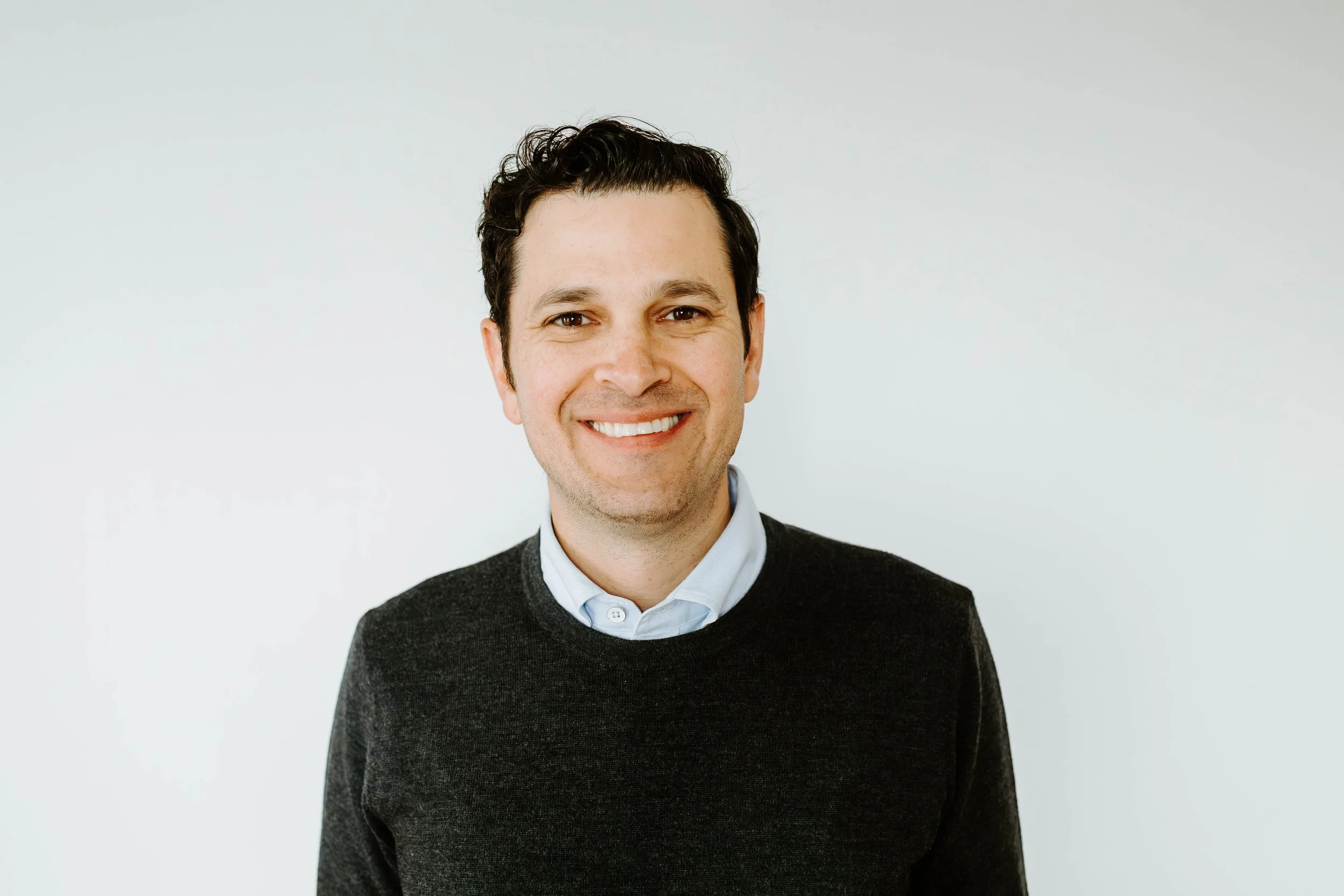
Episode 44: J. Aaron Simmons - Søren Kierkegaard & Faith Beyond Christendom
In this episode of Faith for Normal People, Jared and J. Aaron Simmons delve into the philosopher Søren Kierkegaard’s radical critique of Christendom, explaining why he thought institutionalized religion had strayed from a more true Christian faith. They also cover Kierkegaard’s belief in faith as a lived experience rather than mere doctrine and the challenge to consider what is truly worthy of our worship and finitude. Join them as they explore the following questions:
Who is Søren Kierkegaard?
What is the context around Kierkegaard? His time, place, location, cultural context, etc.?
Why is Kierkegaard called the father of existentialism?
Why should people be excited about Kierkegaard?
How does Kierkegaard define or explain a “true” faith?
What does Kierkegaard mean by subjectivity is truth or truth is subjectivity?
What is success logic vs. faithfulness logic?
What is Kierkegaard’s trio of lived orientations?
Quotables
Pithy, shareable, sometimes-less-than-280-character statements from the episode you can share.
“What does it mean to become a self? In other words, who are we, and why does it matter that we are really deeply invested in being the best we can be? And that's not a spiel for joining the army, it's a spiel for Kierkegaard that invites us deeply into what we might call intentional, purposive living—that we get out of bed and we are becoming a particular person on purpose.” — @jaaronsimmons@theb4np
“What does it mean for you to take up the task of becoming someone you're okay with having been?” — @jaaronsimmons@theb4np
“[Kierkegaard] was trying to get people to realize the invitation to become a Christian, or become a self, is actually an invitation to walk through the vulnerability that defines human existence, and to do so with an eye toward the way that our relationships constitute the world and our place within it.” — @jaaronsimmons@theb4np
“The question we all are asking, and the question Kierkegaard helps us to answer, is: what is worthy of my finitude? Because you are going to die, you are vulnerable. And your existence is defined by that awareness, [so] you then have to make really darn sure that the way you're spending your time is actually worth it. So since you don't have an infinite amount of time, make the most of the time you have. And Kierkegaard, I think, really invites us to lean into that.” — @jaaronsimmons@theb4np
“Faith as I understand it, drawing from Kierkegaard, is just risk with a direction. We are all in good faith or bad faith, meaning we're all moving in some direction, we have some priority, we have something that we think matters—and we're risking ourselves in that direction because we are not doing other things we could have done.” — @jaaronsimmons@theb4np
“Who is it that you're becoming? I hope that we answer that by saying, well, I'm becoming someone committed to truth, goodness, and beauty as a direction worthy of my risk. And that's, I think, what Kierkegaard offers us.” — @jaaronsimmons@theb4np
“Every one of us will figure out what's worthy of worship, where we will tap meaning, what will be ultimate for us. And that, says Kierkegaard, is ultimately where religion emerges.” — @jaaronsimmons@theb4np
“We can live life together, I think, most effectively, when we, like Kierkegaard, lean into the existential awareness of the human condition that is shared. We are vulnerable, but we are relational. So what is worthy of your worship, worthy of your finitude, and defining who you are becoming? When those become our questions, I think that dichotomized, binary, oppressive logic no longer gets traction in our lives, and I think that's a powerful and much needed remedy to some of what infects us these days.” — @jaaronsimmons@theb4np
Mentioned in This Episode
Class: August class “Banned Books: the Apocrypha Edition” taught by Brandon Hawk
Books:
Camping with Kierkegaard: Faithfulness as a Way of Lifeby J. Aaron Simmons
Assholes: A Theory by Aaron James
Join: The Society of Normal People community
Support: www.thebiblefornormalpeople.com/give
-
Jared: You're listening to Faith for Normal People, the only other God ordained podcast on the internet.
Pete: I'm Pete Enns.
Jared: And I'm Jared Byas.
[intro music plays]
This is your last chance to pay what you can for our August class, Banned Books: the Apocrypha Edition, taught by the awesome Brandon W. Hawk. It's happening live on August 22nd from 8-9:30 p.m. Eastern Time.
Pete: When you sign up, you'll get access to the live one night only class plus a live Q&A session, a link to the recording afterward, and downloadable class slides. And as always, it's pay what you can until the class ends, and then it costs $25 for the recording.
Jared: Members of our online community, the Society of Normal People, get access to this class and all of our classes for just $12 a month. But if you'd like to sign up for this class, go to thebiblefornormalpeople.com/banned books.
Today on Faith for Normal People, it's just me, Jared, and it's a long time coming, we're talking about the philosopher Soren Kierkegaard with J. Aaron Simmons. As many of you know, I've been a proponent of Kierkegaard as someone who has a lot to teach us, especially for those of us who are in a faith transition. And Aaron didn't disappoint to be able to connect those dots in this episode. So I'm, I'm really excited for you to hear it. He's a professor of philosophy. He has a book called Camping with Kierkegaard: Faithfulness as a way of life, I would encourage you to pick up as well as a substack called philosophy in the wild. JAaronSimmons.com is where you can find out about the book, about the Substack and everything else. Don't forget to stay tuned at the end of the episode for Quiet Time when Pete's going to jump back in and we'll reflect on the episode and what we learned from the conversation with Aaron. So hope you enjoy it.
[Music plays over teaser clip of Aaron speaking]
Aaron: “We can live life together I think most effectively when we, like Kierkegaard, lean into the existential awareness of the human condition that is shared. We are vulnerable, but we are relational. So what is worthy of your worship, worthy of your finitude, and defining who you are becoming. When those become our questions, that's a powerful and much needed remedy to some of what infects us these days.”
[Ad break]
Jared: All right, Aaron, welcome to the podcast. This episode's been a long time coming, I think, on Faith for Normal People. So thanks for jumping in.
Aaron: Oh, it's my absolute pleasure to be with you. Thanks for having me.
Jared: I want people to be interested in Kierkegaard, so if you had to give your three minute spiel of a biography of Kierkegaard, go for it. No pressure, but this is the hook.
Aaron: So, I think I would start with the turmoil that occurred at his funeral. So, he actually was being buried and at the funeral, his nephew showed up and caused this big scene because he kept saying, Uncle Soren would have hated this. No, he stands against everything that this church funeral stands for now.
And the idea that this guy who died at 42 years old would create a stir at his funeral because it was occurring in a church is I think kind of the coolest hook that there is for getting into Kierkegaard. I actually kind of hope, right, that I write enough that makes people think that there's something worth standing for when it comes to my funeral.
They're like, wait a minute, wait a minute, things matter, right? But no, Kierkegaard, so just to, people know kind of what time we're thinking about. He was born 1813, died 1855, and his entire life he spent in Denmark, outside Copenhagen. And his approach to thinking is trying to, as he put it, figure out what it means to become a Christian.
Now, the better way to think about that, in my opinion, is what does it mean to become a self? In other words, who are we, and why does it matter that we be really deeply invested in being the best we can be? And that's not like a spiel for joining the army. It's a spiel for Kierkegaard that invites us deeply into what we might call like intentional, purposive living, that we get out of bed and we are becoming a particular person on purpose.
Now, why that's relevant to Christianity for Kierkegaard is because he lived in a space, not entirely unlike a lot of what is true for me in the American South, where everybody was assumed to be Christian. This was just kind of like this taken for granted thing. And in fact, during his time period, to be baptized was not only to bring you into the church, but it was to join the citizenship of Denmark, right?
Like this was the greatest example of what we now would call a kind of Christian nationalist model of state. And Kierkegaard thought all of that misunderstood the radical singularity or the radical question of what does it mean for you to take up the task of following Christ as a very particular thing, but bigger, more broadly, which is why he's considered the father of existentialism, what does it mean for you to take up the task of becoming someone you're okay with having been?
And for me, that then explains why he would oppose the institutionalized structure of the church, why he would be horrified by a kind of radical commitment to objectivism that detaches us from our, you know, task of living. He is utterly opposed to speculative philosophy, which was in his day something modeled by the philosopher Hegel, which abstracted from our lived experience to give some big metaphysical scheme that explains it all.
Kierkegaard is much more leaning into, no, like, what we need to explain is not it all, we need to explain where I am, where I'm going, and why it matters. And so at the end of his life, he engages what is sometimes called the attack on Christendom, where he tries to, as he puts it, bring Christianity back to Christendom, because he thought that they had gotten so off the mark that it had become something that you could consume, an almost, you know, uh, economic exchange. You say this, we'll give you salvation. You do this, you get heaven.
And he was trying to get people to realize the invitation to become a Christian, or become a self, is actually an invitation to walk through the vulnerability that defines human existence, and to do so with an eye toward the way that our relationships constitute the world and our place within it.
So ultimately, why should people get excited about Kierkegaard? Because he is critical of all the stuff that we are watching happen right now in our world. A rise of Christian nationalism, a rise of institutionalism, rise of authoritarianism. All these things Kierkegaard's saying, yeah, screw that, and what he's inviting us into is precisely what so many of us are longing for, and I see every day in my students, how do I find something worthwhile?
In my new book, Camping with Kierkegaard, I say that the question we all are asking, and the question Kierkegaard helps us to answer, is what is worthy of my finitude? And finitude just means, because you are going to die, you are vulnerable and your existence is defined by that awareness, you then have to make really darn sure that the way you're spending your time is actually worth it.
So since you don't have an infinite amount of time, make the most of the time you have. And Kierkegaard, I think, really invites us to lean into that. And if for no other reason, I think it's cool that there was a riot at his funeral.
Jared: [Laughs] Well, you mentioned a lot of things. I think there's a lot of things that we can unpack even in your opening statement here, but some of those too, I want to maybe tackle one at a time.
And when you were talking, it made me think of, uh, you know, Kierkegaard says, which I use this quote as like a entry point into one of these topics, that “Christianity entered into the world not to be understood but to be existed in.” Because when we're talking about things like Christian nationalism and some of the other entry points into Kierkegaard that are very relevant for now, there is this, for me, a layer on top of all of that.
It crosses a lot of political lines and it crosses a lot of religious lines, this belief that the most important thing that matters is our opinions of things. This is social media writ large. What are my opinions of you? How do I judge your actions and behaviors? And that can be from a conservative side, that could be from a progressive side.
And what I appreciate about Kierkegaard is speaking into that at a different register, at a different level, that says maybe the most important thing isn't what you think about it, but it's how you embody it. That lived experience of your life. So can you talk more about Kierkegaard and this idea of getting beyond the thing, the nuts and bolts, the facts and figures, the mental ascent, the, “I believe that Jesus died for me and therefore I go to heaven. I believe that.” Because, you know, I'm a child of the eighties and nineties where when you say, I believe, oh man, whether it's patriotism or religious anything, the “I believe” really gets your tears in your eyes, you know, like your belief is what we stand for. And I think Kierkegaard turns it on its head a little bit in a way that I found very freeing, refreshing and ultimately truer to my experience.
So can you say more about that?
Aaron: I often tell people that Kierkegaard and reading Kierkegaard, finding Kierkegaard when I did in grad school, is what made it possible for me to still identify and understand myself as not only a Christian, but in my case, a Pentecostal Christian, right? Which is a complicated statement.
Jared: Me too. Me too.
Aaron: I think that [chuckles] the way that we should relate to this is actually something Kierkegaard said when he was 22 years old. So he writes this journal and it's a famous journal entry and I read it to all of my students when they do Kierkegaard with me because I'm trying to get them to see this is not existentialism as some highfalutin abstract theory of, you know, philosophical existence.
This is absolutely thinking about existence philosophically as a task of living well, which is ultimately what Socrates was all about. It's what philosophy has, in my opinion, always been trying to get us to understand. And so Kierkegaard at 22 writes and he says, “What good would it do me to have understood all of the truths of law, of politics, of religion, if it didn't have any relevance for my life?”
Now, you might hear that in a kind of subjectivism sort of way. All that is true is whatever impacts me, right? This would be a kind of Jeff Bezos, Donald Trump, Elon Musk version of existentialism. That's not what Kierkegaard's claiming. What he's suggesting is what it means to claim something as true is to be claimed by it. It's to be transformed by it such that who you are and the orientation of your lived existence is transformed. So he does say it's important to understand stuff, insofar as understanding helps us propel ourselves into action. He also reminds us that faith is not simply weak belief.
And so your account of, yeah, I'm also born in 77. So I grew up 80s and 90s and belief, you know, we used to do those Christian rock shows and stuff where they would, you know, get everybody excited and say, you know, we believe, and everybody would “rah!” And it was like, yes, this is why youth group is awesome. And then we'd go eat at Applebee's or something soul crushing.
And part of what Kierkegaard does is says, look, if the goal of existence is to simply have true belief that everything we hold is the case, notice that faith then is just like the weakest version of that because the evidence by which we articulate it is not public. It's not shareable. It's not determinant in the way that mathematics or geometry is.
And so what he's trying to do is fundamentally get rid of the idea of faith as weak belief. And the way he does this is by throwing out the notion of certainty as the goal of human existence. Instead, he leans into the importance of the riskiness of living. And this is what I define as faith more broadly, whether or not in a religious sense.
Faith, as I understand it, drawing from Kierkegaard, is just risk with a direction. And so the idea here is we are all in good faith or bad faith, meaning we're all moving in some direction, we have some priority, we have something that we think matters, and we're risking ourselves in that direction because we are not doing other things we could have done.
And so when I say, you know, I identify as a person of faith in a Christian sense, what that then would mean for me in Kierkegaard is this, I'm risking myself in the direction that my finitude, my existence is most meaningful when oriented toward trying to become like Jesus. And so the way I talk about that is, what's Christianity? Like, why am I a Christian? Because I hope God looks like Jesus. Right? Not in the sense of, you know, being a Middle Eastern man with a beard and sandals or something, but in the sense of that canotic, humbled manifestation of other-oriented love as the core fabric by which reality is then understood. Yeah, I'm in on that.
But notice that's not just a proposition to which I assent. It's not just a claim that I give warranted assertability, which are all fancy, you know, high dollar terms in philosophy. It's the claim that I live into as true. And this is why Kierkegaard will eventually say that subjectivity itself is truth. Again, that doesn't mean truth is whatever I think. It's, truth happens. It is an event. It's a verb, not a noun, because it is what calls me forward and lets the world be meaningful.
So yeah. Belief? Important. Right? But if you want to have just true beliefs, go read a phone book and memorize it. All your beliefs will be true, right? But that's not going to do a whole lot for you. So there's got to be something that is not dismissive of holding beliefs that are accurate accounts of states of affairs. We should still do that. This is why a post truth world is dangerous. Conspiracy theories are vicious, right? Ignorance is not something excusable in the name of loyalty.
And yet, who is it that you're becoming? I hope that we answer that by saying, well, I'm becoming someone committed to truth, goodness, and beauty as a direction worthy of my risk. And that's, I think, what Kierkegaard offers us.
[Ad break]
Jared: I think this is worth unpacking a little bit. Because I do think when people step out of a Christian tradition that does have certainty as the goal, that’s usually masked as faith in Jesus but really there is a certainty that is behind it. That's the man behind the curtain is certainty. So, they know they don't have that, and they don't have the language really to talk about it.
They think things like, yeah, “I don't believe in objective truth anymore” or “I don't believe in absolute truth” or whatever it is and then they'll say things like, which I think, you know, Kierkegaard, truth is subjectivity, you know, But then they're accused, like you said, of, yeah, but that's, that's just relativism.
That doesn't hold up. That's, that's anything goes relativism. And we can show logically why that doesn't make any sense. And so then they think their only two choices are anything goes relativism or capital T truth, which is usually just a manifestation of some authoritarianism, right? Somebody has some interpretation of the Bible is what you're elevating to this place of capital T Truth.
And so they will either stick with the one or go to the other, which both I find unhelpful and untenable. So, can you just unpack this idea of truth as subjectivity in a way that is congruent with, right? It adds to, doesn't take away from, science gives us these things and we want to follow the evidence and we want to follow logic.
But for me, I would describe it as, it's when we confuse the means with the end. If we think that's the end, and it comes at all costs to get there, that's the pinnacle of the mountain, to know that, then I think we've missed something, but that's not to say we need to throw it out.
Aaron: Yeah, no, I think that's exactly right. So, one way to approach this general idea is something I tried to develop in Camping with Kierkegaard, which is a distinction between two different orientations, or I would even say logics, right, where logic is not S knows that P for Q reason, but general frameworks by which the world makes sense. And on these two logics, one I call a success orientation or success logic, and the other is a faithfulness logic or orientation. The difference is exactly what you just described. On the success model, what gives our life purpose and meaning is the external achievement or accomplishment that we can check off the list because we now have it. And notice, this is the way we tend to think about belief.
I have salvation as this object, like I have a shoe or a car or a cup, and I have this because I've achieved a particular kind of goal. And that goal is I did a thing. Right? In this case, the Roman road, I asked Jesus to come into my heart, forgive me of my sins, whatever narrative your pastor said. And I did this, I got this as a reward, and now I'm better than others who lack this thing. And this creates then this sense of external accomplishment as motivational inspiration for what others need to strive to achieve themselves.
Now, what I've just described, doesn't that sound a lot like the kind of conversionistic narrative that lots of us were raised into? And notice that's actually way closer to what I would describe as an idolatry of capitalism than it is the lived example of the person of Jesus, right? As this model for what it looks like to be or become a Christian. Part of why Kierkegaard says he is not a Christian, but he's trying to become one, is because he thinks being is what success is all about. I am this. I've done this. I have this.
Compare that to faithfulness, which is about I'm ever further trying to lean into what I think's worth it, right? And in that sense, I'm not a Christian, but man, I'm trying to become a Christian with everything I have in me. Now, it can be tempting to narrate that as this always striving but never coming to know, always, you know, ten feet from the summit but never getting there.
That can be really exhausting when we already feel like we're overworked, overstressed, overtaxed, overbusy. But part of what Kierkegaard does, and I think generally existential philosophy does, is it invites us to recognize when we abandon the success logic as the value theory by which we make sense of ourselves and our relation to the world, we don't put aside achieving goals. Those just become logistics, right?
So of course we still care about having, you know, true beliefs. Of course, we still care about achieving certain goals relative to our fitness, you know, agendas or our career plans or our families. Right? But notice. Oh, I got my 2.5 kids! Done. Boom. Right? That doesn't make any sense.
And so Kierkegaard invites us to this constant, tireless persistence in the same direction. And this is where I find some really cool inspiration to come from. Well, what are some other examples of what that looks like? Well, it's Martin Luther King when he says in his mountaintop speech the night before he gets assassinated, I've been to the mountaintop, which of course is this metaphor for “I'm living worthy of my finitude. I'm okay with me,” right? It doesn't matter if I go with you where we're trying to go. That's not what's important. What matters is that I've lived faithfully, right?
We see this in Mother Teresa, who in the midst of the dark night of the soul, which now we know about, you know, in light of her journals, her point was not, if only I can eliminate the reality of poverty, then I will have achieved something. No, it's can I keep living into what matters, even in those moments where it doesn't feel good or even in those moments where I don't actually even feel like it's true. it still anchors me. And so one of the great problems that I have with the way that we so often cash out Christianity, especially in a historically kind of white evangelical mode, as a success logic, is it forces a binary choice.
Either the evangelicalism of your Baptist church or your Pentecostal church or your, you know, fill in the blank, right? Or, naturalism, atheism, like, there's no middle, it's like, yeah, but there's also like progressive Methodists running around, like, Nadia Bolz Weber is still a pastor, like, the idea that there are other models we could make sense of and find life giving, that was radically excluded by the success logic of the evangelical space.
Because if we can convince you it's this or hell, right? It's this or atheism, it creates a fear of failure. And so notice, it's not even that we're motivated by the achievement, we're motivated out of fear. And no wonder there's so much religious trauma when that's what you've been given as your options. The problem is, in my opinion, so many people who have, you know, deconstructed or moved away from their faith or exvangelical, whatever, you know, they identify for their faith journey. Part of the problem is, I think they move away from the truth claims that they once held, but they maintain the success logic by which they held it. So they haven't left the binary, right? It's now the only option is, “There's no absolute truth. There are no objectives. Morality is radically contingent” and you're like, well, maybe like that's one of the options in play.
But it turns out that there is a robust set of lived possibilities. And wherever we stand, it's important to realize there are rational, reasonable, and in many cases moral alternatives that we have not chosen. And when you realize this, notice what happens. I think it yields, which I talk about in the book, three things.
It motivates humility, because now you're not so concerned about you having that certainty. You're like, I'm good. Like Jay Z says, baby, I'm good. Right? Like when we know that we're good, that doesn't mean I've got it all figured out. It just means I'm okay with me. Even if crap is not okay, I'm okay. And then after humility, it motivates hospitality because I desperately want to hear where other people stand and why they stand there and the kinds of directions they think worthy of their risk, because that helps me make better choices about my own experiences.
And so when we go from humility to hospitality, I think it lands us in what Anne Lamott will talk about as a kind of gratitude that defines our existence. Not grateful for having that object, right? But grateful because despite the mess that is the world and the vulnerability that defines it, somehow I'm also in a space where beauty remains, where conversations continue.
And that's where, of course we should care about what we call objective truth, because vaccines are important and we should get them. Of course, we should care about something called absolute truth, not because it's a way of pounding down our enemies, Because what it means to be absolute is it's something that actually makes my existence have more to it than just a throwaway, you know, facile sort of deployment.
I absolutely believe that living on purpose is worthwhile. Now you might say, well, whoa, whoa, let me, absolute, I'm not certain about that. But it's the hope that I'm willing to live into as the truth that defines my existence. Now, do I want scientists to run around doing this? Eh, I'm okay with them like leaning into mathematics as objectively the case. I'm okay with objectivity being a discourse we use for certain domains of our shared experience. But at the end of things I just don't think anybody on their deathbed, talking about Kierkegaard's funeral. Like, I don't know many people when dying look back and say, man, I am so impressed by my resume. Y'all make sure you pin that to my coffin. Look at all I did.
Instead, what we see is Henry David Thoreau saying, let's live so that when we come to die, we don't realize we've not even yet lived in the first place. And that's what Kierkegaard calls us to is what I would describe as the biblical claim of life more abundantly. And that more abundantly requires us to start by being humble about that dichotomy in which we have understood so very much. Maybe the dichotomy is the problem, not only the views I once held. Those might be false. But it could be the case that some of them actually are still possibly true in a different way.
And that requires us to be humble enough not to think that we can be smug about what we've rejected. And that's a big ask.
Jared: Right. And I think what's devastating to me is how deeply a lot of us internalized, not to caricature this, but we've internalized a sales tactic. Which is what you said. It's how do you sell this? Well you oppose it to that? And so you don't want that, right? And then you skip over all the options in between this and that and say, so you want this. And we do that with the Bible for normal people, we talk about inerrancy sets that same dichotomy up with the Bible. It is either perfect or it's trash.
And so it was a sales tactic to say, well, you don't think the Bible's trash, is it right? Okay, well then it's perfect. But what happens is that logic gets flipped a little bit. Or it gets completely reversed now where people say, Oh, okay, so it's not perfect. So I guess it's trash. And then it's like, Oh yeah, that kind of turned on you, didn't it?
And so what you're saying, like, I think a lot of what we do at the Bible for normal people is that what you're talking about is how do we have a different posture toward this thing that allows us to see beyond the binary and find out that now there are tools and resources available. To mine that space between the this and the that, the either and the or, and what I hear you saying, and I think Kierkegaard would endorse, is there's a lot of life to be lived between the either and the or.
Aaron: Yeah, and Kierkegaard in fact is very intentional when he says that there are lots of options. He, he describes three, so his philosophy is kind of built around this trio of lived orientations. He calls them aesthetics, ethics, and religion. They don't typically mean what we mean by them, which is why when I give interviews about Kierkegaard to non-Kierkegaardians, I tend to be kind of hesitant to get into those three.
The big thing to think about it is, ask yourself this: are you motivated by the excitement of the new phone, the excitement of the new car, the excitement of the new relationship, and then get really tired and bored by the reality of what living into that thing looks like, right? You're the person who washes the car 9,000 times the first week, and then by week three is like spilling milkshakes because, hey, it's just an old thing. I need a new one. That's what aesthetics looks like.
Ethics is simply this overestimation of the value of objectivity. Um, the ethical is what most of us were raised as Christianity being. And notice what's so interesting about this is that we were told was opposed to this aesthetic view, right? Because, oh, that's what those atheists do.
They just go around and, you know, do all kinds of things. They're just sex, drugs, and rock and roll all the time. We are the ones who understand objective truth and morality. Kierkegaard comes in and says, Look, both of those, if those are your options. They both will lead to what he calls despair. And the reason they do is because they both work on the success logic that I've described.
Aesthetics, you'll never have enough to be enough, right? Like the, the example he gives is the seducer who has to seduce thousands and thousands of people because it's in the seduction that they find joy, not in the having. Contrast that. To the person who thinks, no, no, no, it's in having the thing. It's getting married. It's getting the job, having the career. And like I told a student of mine recently, which sounds awful, but I mean it in a sincere, existential way, not a literal way. And the student said, my biggest goal is I want to be on Forbes 40 under 40. Like, that's the goal of my life. I want you to help me get there.
And I was like, you know what? I will help you absolutely. Whatever I can do to foster and open opportunities for you, I'm in. I think you're amazing. Let's make it happen. Oh, by the way, young person, I kind of hope you get hit by a truck before your 41st birthday. And you're like, what? Because notice your whole conception of what matters is only getting that thing. And once you get it, you've never thought about what it looks like to live internal to it. And so many of us, that's the way we understood Christianity. Get this at the altar, make that commitment, you know, give the tithe check, whatever it is. But then we didn't say, Oh, and now what does neighbor love look like?
Oh, it may wreck and rupture and be trouble for all of our assumptions about power.
Jared: Well, and maybe I could, you say power, I think the other thing, what you're describing, I think we don't recognize to and take account of when we are oriented toward the having, right? So we have faith, we possess faith. Now we are in a mode of possession, and what does that lead to? Protection. And that leads to oppression. It leads to excluding. It is, I have to hold this tightly, and we become kind of a golem with the ring, right? It is all consuming to protect the thing I have. I don't care who I hurt, I don't, I have to protect what I possess. And if you possess eternal life, and it's based on this precariousness, you're gonna protect it at all costs, and that's gonna be oppressive to other people.
Aaron: Oh, absolutely. In fact, yesterday I was talking to a friend of mine who's an Iranian gentleman, and he asked me, he said, What do you think is the biggest challenge the church faces today? And I said, Oh, it's commitment to self-protection, right?
When we become self-protective, notice we're not humble because now we've got to be immune to criticism. We are certainly not hospitable because we are convinced we have possessed, have gotten the only thing that matters.
Jared: And the guest is a threat.
Aaron: Every other person's a threat. And so what does that then yield? It yields special privileges and entitlements because we're the ones then who get to dictate for others the right way of living.
Now, what's so interesting about those three things that self protection yields, which again, we see in the church, this is what my friend Aaron James, the philosopher who wrote this amazing book, Assholes, describes as the definition of an asshole. What is an asshole? It is somebody who claims special privileges out of an entrenched sense of entitlement and makes them immune from critique.
Whoa, right? Like, sure seems like there's a lot of assholery working in the churches today. And I think it's because that success logic has gone so deep that then whether aesthetically I want more, I want different, I want new, or the “I have and now I can oppress you because I'm the one who gets to dictate what the case should be,” Both of those are radically non-humble and non-hospitable.
And then, says Kierkegaard, religion, though, emerges as a rejection of both of those things. And this is what's so cool. Religion is not the having as opposed to the seeking. Religion is not the certainty as opposed to the doubt. Religion, for Kierkegaard, is the, what he calls, the absolute relation to the absolute, which is a complicated way of simply saying, you've got to figure out what's worthy of worship.
And this is something that I draw from David Foster Wallace and his amazing commencement speech that got published as a book called This is Water. Wallace says, in the real life trenches of adult existence, there are no atheists. Now, he's not talking about not actually people who deny the existence of a god or are non-theists. There are plenty of those.
Every one of us will figure out what's worthy of worship, where we will tap meaning, what will be ultimate for us. And that, says Kierkegaard, is ultimately where religion emerges. Because, notice, the aesthetic person, the more, the new, the better, the different, they are worshiping newness and novelty and innovation, something I think that our deep drive toward entrepreneurial culture might, you know, take a look in the mirror and say, hmm, have we made an idolatry of novelty and abandoned a commitment to excellence?
Well, what about the ethical? Or in our case, you know, the church logic? Shoot, they really do seem to fall into this despair of never being able to be themselves. They've always got to be the ideal Christian. They've always got to be that Instagram post, right? And so the despair infects both of those options.
And we think those are the only two. Kierkegaard shows up and says, no, you've misunderstood faith. Faith, religious existence is not ultimately, though it was for him and for me, it's not ultimately about Christianity as a historical tradition. It can be for people who identify as Christians, but it's more about, are you taking yourself up, recognizing that whatever's worthy of worship, it ain't you, right? Like, that's that move that I think, you know, is masterfully described by Kendrick Lamar, the great contemporary philosopher, when he says, sit down, be humble. When we sit down, be humble, we are probably not going to oppress others because we're handing them microphones. When we sit down and be humble, we are not intimidated by criticism from others because we're welcoming it as actually helping me get better.
And that move becomes one that builds community, something Kierkegaard is not famous for having talked much about. His individualism sometimes overrides some of his actual views. This is a community building thing. This is what Dietrich Bonhoeffer calls life together. And we can live life together, I think, most effectively, when we, like Kierkegaard, lean into the existential awareness of the human condition that is shared.
We are vulnerable, but we are relational. So what is worthy of your worship, worthy of your finitude, and defining who you are becoming? When those become our questions, I think that dichotomized, binary, oppressive logic no longer gets traction in our lives, and I think that's a powerful and much needed remedy to some of what infects us these days.
Jared: When I go back to my Kierkegaard days, I think of these three modes or kind of stages on life's way, right? You have the aesthetic, the ethical, and then you have the religious, but there's this in between, if you follow kind of from some, from some lines of thinking that was always helpful to me, and I'll just say it that way, of this knight of infinite resignation.
Between that church logic and true religion, there is a place for infinite resignation. And I think a lot of people could relate to that space of where you sort of lose all orientation and all bearing because you're losing, “objectivity.” You're, you're realizing that your entire life has been to build an outward facing facade.
And then you wake up one day to realize, Oh, I've given no attention to the self. What is worthy of worship to me and not try to escape that question by looking outward, but only looking inward and saying, Oh no, this is, I think the deep humility to recognize, Oh, this is the very beginning. I'm a toddler. I'm a, I'm an infant and I have to start all over. And that can be a very scary time, but maybe as we, as we wrap up our time, what about people who are in that place? They are knights of infinite resignation. They don't know if they can be courageous enough to be knights of faith. Are they going to enter into this religious existence?
And again, we don't mean—hear us, listeners. We don't mean a religion in terms of being a Christian or not being a Christian. We mean it in the way Aaron's describing it as someone who is taking these questions head on existentially and being transformed by the responsibility of making meaning for our lives in the direction we want to go.
What about these people who are, are, they've been tipped off the precipice. They're no longer where they were and they're grateful for that, but they're also terrified because they don't see what's ahead?
Aaron: Oh, absolutely. Well, before I give a kind of short answer to this, let me just say to echo your what we mean by religion is not right. I want to make very clear what I understand by faithfulness. Though I personally understand the direction of hoping God looks like Jesus to be worthy of my finitude, I absolutely think that atheism is a perfectly sensible and maybe true orientation of faithfulness as well, right? So let me just be very clear.
And in that sense, it would be what Kierkegaard means by a religious commitment, even though it would not be theism in any sense that we would recognize, right? So absolutely just want to echo what you're saying. So I want to turn to Nietzsche, which rarely do I go from Kierkegaard to Nietzsche. I'm usually a kind of, let's start with Nietzsche and then move to Kierkegaard, where I think better things happen.
But I want to probably end here with Nietzsche and, and talk about the complicated, but I think super helpful notion, that expresses what you're getting at. His phrase, “God is dead.” Too often, we think about the death of God as a kind of atheistic hypothesis, right? “There is no God. This is silly. Theism is false.”
Jared: Well, talk about that. Talk about that binary. You know, I grew up with those bumper stickers that said, “Nietzsche is dead. Quote, God.” Yes. Right? As though this is the battle. This is the dichotomy. God or Nietzsche.
Aaron: Well, and, and, you know, the Newsboys, right, had a hit song, you know, but God's not dead. He's surely alive. Notice that also apparently gender is part of living in that space, right? The idea of understanding Nietzsche's death of God is to, again, reject that binary and say, this is not a question of theism and atheism. Alive or dead. This is a question of responsibility being anchored in the reality of my own agency or responsibility being abdicated by turning to an external authority that actually now allows me to think I don't have to make decisions.
What Nietzsche rejects when he rejects God, he is personally an atheist. Again, I keep trying to say these are real options, but what he means in this existential way is when we think about God as dead, we enter the birth of the responsibility that falls on every one of our shoulders. Not responsibility to bear the weight of the world, not to care for every other fully, that's where we get into like Derrida later. We'll do another episode on that maybe, Derridean.
Jared: Yeah [laughing].
Aaron: But for Nietzsche, this is simply the idea that I have a responsibility of choosing what will matter, choosing what will count as true. And so why I think that's so powerful for those who really do think that ultimately this infinite resignation, this “I've fallen off the precipice, now what? Right? I'm not standing triumphantly with the faithful Kierkegaardians, but I'm sure as heck not standing with all the, you know, ethical, ‘Christians of my youth’ I guess I'm in no person's land.”
What Nietzsche says is more like this. The real courage is not reaching out and grabbing something again with certainty. The real courage is recognizing that that resignation, that what, again, is popularly called deconstruction, is where the real courage happens. So Nietzsche, this is not his example, but it is one that I get a lot of traction of when I describe his thought.
Imagine you're standing next to a precipice, right? You said we've fallen off of it, but when you're standing next to that precipice, everything in us wants to run back to the security of the tree and the ropes and the, you know, observation deck behind us, right? And that's exactly what, again, traditional evangelicalism has said, “Hey, come on over. Not only do we have harnesses and ropes that will keep you safe, we've also got great coffee, right? Come on in.” And the thing is, when we realize I can't do that anymore, that's not an option for me. The logic of that dichotomy just doesn't gain traction in my life. We find ourselves at that precipice, Nietzsche says you have to decide whether or not to jump.
And when we jump, Kierkegaard would call this the leap of faith, though he never uses that phrase, but that is the weeds, and so we'll bypass it. When we make this jump, what we realize is only once we, he says, “affirm the abyss,” say yes to the question, the, the agonizing reality that what we have thought may not be. What we have worshiped might actually have been idolatry. When we jump, he says, only then can we realize we've always been falling, and the illusion was that we were actually standing on a precipice with good coffee and harnesses. We've always been responsible for choosing. There is no external authority that takes away our weight of existence.
And so when we are freed from the thought that we are lost, we've lost our faith, we now don't know where to go. Nietzsche says this will feel like we have wiped away the horizon and no longer can make sense of what's up, down, sideways, or byways. And notice when I talk about faith as risk with direction, that's why. If we have no sense of direction, we haven't escaped responsibility, we've just refused to recognize that it continues even without a direction.
And so I would want to encourage those who feel agonizingly lost, having jumped but can't make sense of what it looks like to fall, in that moment is where I think Kierkegaard, Nietzsche, Kendrick Lamar, Maya Angelou, Simone Weil, Dietrich Bonhoeffer, all these cloud of witnesses to whom I turn in my book, they all say, Hey, guess what? We're right here with you, right? So be okay with the fact that the mountain was the illusion. And when you are aware of this, That's as Martin Luther King says, that's when the step appears, even though you didn't see it when you took the first step, right? The staircase has to appear later. And that's not to say, we now get on a staircase and get back to the stable mountain.
No, we actually realized like, man, this is really cool. It turns out, I've got a pretty awesome parachute that allows me to see this amazing valley in which I am now floating above. Beauty emerges when we've lost the idea that I couldn't move, right? Switchfoot, not a band I think a lot about, but they, they, I like their song Dare You to Move because the idea is they're effectively asking us that exact question.
I dare you to move, because it turns out you've always been moving. Own it. Admit that. The responsibility's on your shoulders, but this isn't too much for you to bear. It's actually now, for the first time, an invitation to realize what it means when Jesus says “my burden is light,” right? This actually is lifting off of us this unbelievable oppressive weight of “that's the right thing. I've failed at it. I'm not good enough. I've got to do more.” And then suddenly we realize, wow, maybe that was the illusion, and like Jay Z, baby, I'm good, even though stuff isn't, right? So, I'm absolutely a fan of saying, if you want to become a Christian, not in a having achieving certain way, but in this life directional orientation existential way, if you want to become a Christian, you've got to probably be okay with the death of God.
And Meister Eckhart says this, “God, get rid of what I think of you so that I might find you,” right? Maybe I'm more open to who God is when I've abandoned who others have told me God must be to reinforce their privilege, their status, their identity, and ultimately justify in their own minds, their assholery.
Jared: [Laughing] I don't know if we've ever ended a podcast on the word assholery. So I think there’s a first time for everything. [Aaron laughing]
Aaron: I think that's a good challenge, right?
Jared: Oh, thanks Aaron for coming on. It's great. It's fantastic. I think we could keep talking more and more because I think people who are in a faith transition and really centering it, we call it deconstruction or whatever you want to call it, but away from a faith tradition of certainty into something maybe not yet known or defined. I think Kierkegaard has a lot to say and a lot to offer. So thank you for being a Kierkegaard evangelist and writing books and all of that.
Aaron: Well, I appreciate it, and I do want to encourage folks, take a look at Camping with Kierkegaard, it's available in paperback, in Kindle, it's available now as an audible book. And please too, I hope people will come over and find me on Substack. I do a Substack twice a week called Philosophy in the Wild, and I also do a weekly YouTube called philosophy for where we find ourselves. I would love for people to reach out, tell me what they're working through. And, uh, we can think together on—the way I describe it is come, let's walk together and talk along the way on life's trails.
Jared: Excellent.
[Music signals start of Quiet Time segment]
Jared: And now for quiet time…
Pete: …with Pete and Jared. All right, Jared. So Aaron talked a bit about his interest in Kierkegaard, how that happened. And I'm interested in your Kierkegaard journey to coin a phrase because no one ever uses the word journey. Yeah. And, um, yeah, cause I was, I was into him a little bit cause I thought he was edgy. But you, you have actually read him more deeply than I have, so talk about him.
Jared: Yeah, I often think of Kierkegaard as someone who ushered in this faith transition for me, and for that, I will forever hold him in high regard, even if now maybe I would disagree on some things. It's interesting. I met Kierkegaard in college, uh, being a philosophy major. And I didn't particularly like Kierkegaard in college when I was reading, reading him. I was much more into a little bit more analytic philosophy and Kierkegaard was talking in a way that felt more, I mean, it was existentialist. I just didn't know it at the time.
But then fast forward a few years later and I'm a pastor and starting to, question some things about my faith and about Christianity as I'd inherited it. And one of those things that I think we can talk about more in a minute is this idea of a consumerist Christianity, a transactional Christianity. And so as I started to think about that and wrestle with it, I was drawn back into Kierkegaard who talks about all of these things.
And the one thing that really struck out to me, which I think I mentioned in the episode with Aaron, is this idea that Christianity. entered into the world not to be understood, but to be existed in. And that was one of my favorite quotes from even back then, because I grew up in a tradition where Christianity was all about what you understood.
And to realize like, no, the thing that always was off putting or unsettling for me about my faith tradition was that while I was very good at knowing things, I was very smart, I could pick up on concepts. I had this feeling that doesn't seem to me all that this Christian faith is supposed to be about and we would say that, we would give lip service to it, that it's about how you live your life.
But then that also fell flat or it felt thin because it how you lived your life was boiled down into like a moralism. It wasn't robust, it wasn't thick with love and messiness and justice and it was, do the right things, don't watch rated R movies, don't listen to Jay Z, like those were what it meant to live out your faith.
And Kierkegaard gave this vision for embodying your faith in a way that felt more dangerous and it felt more adventurous and it felt more full of life. And I, from that vantage point, I started to see that my tradition, while well meaning, felt empty. It felt death-dealing rather than life-giving. And so that was huge for me. It sort of sparked this whole renaissance of my faith.
Pete: Yeah, and backing up to talk a little bit more about a transactional consumerist Christianity was something that Kierkegaard was very critical of. Which, that's the part I remember just from my little reading of him. So talk a little bit more about that, what, again, just flesh out again, what it means and I guess what it means to you, too, to have that kind of critique.
Jared: Yeah, I think it's very relevant, and Aaron kind of makes this point of how it's relevant today, and it's in Kierkegaard's day, he was a part of the Danish church, so he was Danish in Denmark, and part of the upper elite social class. And within that class, they had adopted Christianity as a social norm.
So everyone was Christian. You were born a Christian. That's how it was for most of the Middle Ages and into 19th century Denmark. And that's kind of how it was in Europe and the West for hundreds of years. You're just born into Christianity. So by the time we get to Kierkegaard, this is 1813, when he's born, he dies in 1855.
By the time we get there, it is something taken for granted. Your Christian faith doesn't necessarily, quote, mean much to the average person. It is, to Aaron's point in the episode, you are born into the church. You get baptized, that's also your birth certificate. There is no separation of church and state.
So, to be a Danish citizen is to be Christian, and you didn't have a choice in that. And he calls that the herd. There's, there's a herd way of thinking. It's the social club way of thinking of Christianity. You don't have to become a Christian and that's important for Kierkegaard. You don't ever have to become a Christian. You just are a Christian. So there's no personal, there's no personal commitment, like investment or there's no investment in the faith. And that becomes really big for Kierkegaard around this idea of commitment, of choice, of decision, of acting, of embodying, because in his day, you just are born Christian.
And so, for me, that was largely true growing up. I grew up in Texas. You're born a Christian. Everybody's a Christian. The hard part is becoming a Christian when everybody's a Christian. That's sort of how Kierkegaard would say that. And that really rings true for me today, especially in a faith transition, of coming out of this idea of a transactional relationship where becoming a Christian you are either born into it culturally, you're born in the south in the united states a lot of times, or and and or, there is a very simple way to become a christian which is I just say a prayer one time when I'm nine years old at a camp and then again when I'm 10 and 11 and 12 and so on and so forth But you just have to say the prayer and then you're in. And there isn't this requirement to continue to grow and embody a life of pattern after Jesus.
Um, so that's, that's kind of my take on it. And I do think it is still the case. However, going back to kind of what we said earlier, I think evangelical Christianity has a version of this. I just find it thin and not compelling. They would say, yeah, we are following after Jesus, but it kind of boils down to a list of like four or five socially acceptable practices. Like you get up early and you read your Bible. That's what it means to follow Jesus. You pray before mealtimes. You avoid the crass.
Pete: You pray before everything.
Jared: Yeah. Yeah. Baseball games. I learned the Lord's Prayer at a baseball game.
Pete: Really?
Jared: Yeah. Because at, before games, instead of the national anthem, we all lined up and said the Lord's Prayer.
Pete: Interesting.
Jared: As like a nine year old in little league. But that, those are kind of the ways you become Christian. It, it, but it becomes formulaic and it becomes this transaction. If I do these five or six things, people around me see me as Christian, and that's really what counts. Rather than me before God, the individual before God, coming face to face with a faith that requires something of me.
And that's what's compelling to me about Kierkegaard. But what would you say? How do you see this idea of consumerist or transactional Christianity?
Pete: Yeah, I mean, as you're talking, I'm asking myself the question about whether this is really endemic to Christianity. Right? Not faith in Jesus, but those are different things.
Right? So, and I, I see it in myself all the time and I'm trying to rub myself clean of the notion, but then the thing is that it's scary because what are you left with? If you don't have the transaction, like if I go to church, God's going to be happy. If you don't have the Job moment, if, if, you know, I'm, I'm super worshiper here. I'm, I have all the goods, you know, and if something goes wrong, you know, then you, you lose everything. And you know, why are these bad things happening? There must be some sin in your life kind of mentality, you know? And, and I don't believe any of that, but I think my body does or my, the back of my brain does cause it's still there.
And to have people like Kierkegaard remind us that. You know, this can't be what this is about, right? And that's a co-opting of something that is supposed to be more experiential, existential into a system to, I mean, my way of putting it is, is to keep people in line. That's what I think this is about, right?
And I guess the question is, I mean, what do you think, Jared? Do you think that this is endemic to Christianity? And people are going to say, well, I don't believe that. Yeah, but we're talking about the various denominations and systems of thought that have been many in the history of Christianity. I mean, I can think of a couple examples of maybe where people have really done a good job of moving beyond that, but like maybe, you know, contemplative monastic movements.
Jared: That's exactly where I was going.
Pete: Something like that.
Jared: Yeah, I was going kind of desert fathers and mothers.
Pete: That kind of thing. Yeah. I mean, not, not the, not the monks we see on TV that sort of whip themselves with, you know, flatulate themselves. So it's not that, it's more those who, they're not thin, like you were saying before, you know, it's, it's a very thick kind of faith, but they had to leave the system in a sense to get to that.
Jared: I mean, historically, this is where we can, we can—often people talk about like Christianity in practice versus Christianity in theory, and we can escape criticism when we just retreat back to, well, in theory, it's not, but when I think through the history of the church, the dominant modes of Christianity and the leadership and the institutions, it seems steeped in this transactional way of thinking.
If not explicitly, like in the Catholic Church of Martin Luther's day, where it is, you can actually buy relatives out of purgatory and hell, and you can buy yourselves out of your own sin. That's explicitly transactional, but like what you're talking about, it gets deeper than that when we have a God who is all powerful, all knowing, and interacts with us on a day to day level, naturally the questions become, how do we get in this God's good graces so that bad things don't happen to us, and so that good things will happen to us?
And that is in the Bible itself. So it's, it's a tale as old as time. And if that's what we mean by transactional, I think it's always been there. It's always been there alongside other conceptions of Christianity or Judaism, faith traditions that resist it. And it's really hard. I think in some ways the biblical witness does what we do, which is like you're saying, it's always in the back of our head. We're sort of dipping in and out of it regularly.
Pete: “No, it can't be like that.” Maybe Jonah. No, it can't be all transactional, right? So yeah, and I, I, I feel that and I wonder if maybe somebody like Kierkegaard could represent like an evolution. I know everybody's freaking out because I use the word evolution to talk about Christianity, but the evolution of the expression of Christianity, because people have changed, you know, times have changed and, and maybe we're just—we’ve thought a lot over the past couple of thousand years about problems with the transactional view of faith.
Right? And, and so maybe, you know, we're talking about it more. And I think that's even true in our country, in America, in the last couple of decades, you know? I just, my, my vision of contemporary Christianity in the fifties was, oh yeah, transactional. Absolutely. Go to church, do your stuff, and then God's happy with you, and you go out and do your life. Yeah.
Jared: And I think that reminds me, you know, the alternative to this transactional Christianity is this more existential, at least for Kierkegaard, there's this existential element to our faith. And it reminds me of Rachel Held Evans, who said, you know, this Jesus thing, this, this faith, it's something I'm willing to risk being wrong about.
And that's, that's the thing, is what are we risking? And that's a huge theme for Kierkegaard, is this transactional Christianity doesn't require us to risk anything. We have to put our life on the line, not in the, again, missionary, sort of dramatic kind of way, but in the everydayness of our life. How are we putting our life on the line every day? And for Kierkegaard, that was a big point of, every day we have to wake up and make this choice.
Pete: Yeah, every moment.
Jared: Every moment. Yeah. And what is it that we are risking for and toward? And it can't be Jesus generically. That's a cup, right? That's a container. But what are we putting in that container? And I think that's important for me, because again, I can just hear my younger self agreeing with all of this as, yeah, I put my life on the line in these dramatic ways, or I go to, you know, Africa to tell people about Jesus, and that's how you have to put your life on the line.
And Kierkegaard would say, no, there's, I mean, I don't know what Kierkegaard would say about that. I would say, no, that's not the same as, are we risking for other people? Are we risking for, you know, what, what are the things that we are committed to that we're risking ourselves for?
Pete: Well, cause I can tell you, like that cup or container, I think, I mean, not to overstate, but in evangelicalism tends to be Jesus died for you and accepting that the transaction happens, you avoid a very bad thing. But it's like, okay, but what, what do I do tomorrow? I mean, what do I do this second? How do I live? Right? And, and, and that is, that's not scripted. It's therefore has an element of risk to it. Cause you, how do I know if I'm right? You don't, I don't. Live into this. Right?
Jared: Yeah. And maybe another way of saying it, not to bring it back to the Bible, but a lot of people's faith is Christmas and Easter. It's, we read about Jesus's birth, we read about the death and resurrection, because those are the main points to getting us saved. And it's, most of the gospels are about how Jesus lived.
Pete: Well, that's even the creeds, have those two bookends and leave the stuff in the middle out, right?
Jared: Right. So that, it's baked into our theology.
Pete: I wonder what Kierkegaard would say about that. But anyway.
Jared: Yeah.
Pete: That's a whole other topic. Let's not do that today.
Jared: All right.
Pete: See ya, folks.
[Outro music plays]
Jared: Well, thanks to everyone who supports the show. If you want to support what we do, there are three ways you can do it. One, if you just want to give a little money, go to thebiblefornormalpeople.com/give.
Pete: And if you want to support us and want a community, classes, and other great resources, go to thebiblefornormalpeople.com/join.
Jared: And lastly, it always goes a long way if you just wanted to rate the podcast, leave a review and tell others about our show. In addition, you can let us know what you thought about the episode by emailing us at info@theBiblefornormalpeople.com.
Outro: You've just made it through another episode of Faith for Normal People! Don't forget you can catch our other show, the Bible for Normal People, in the same feed wherever you get your podcasts. This episode was brought to you by the Bible for Normal People team: Brittany Hodge, Stephen Henning, Wesley Duckworth, Savannah Locke, Tessa Stultz, Danny Wong, Natalie Weyand, Lauren O'Connell, Jessica Shao, and Naiomi Gonzalez.